
Calendula
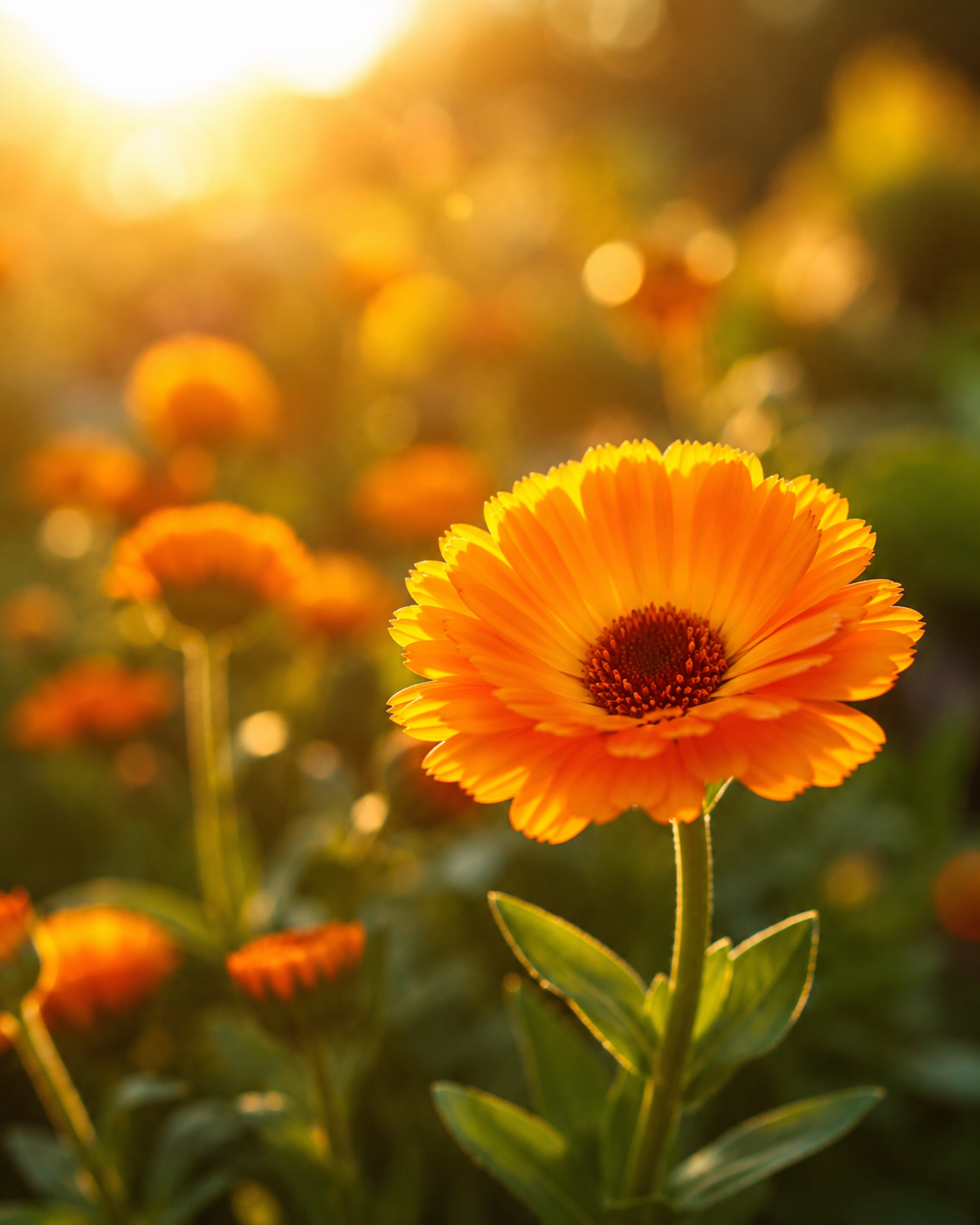
Calendula, or pot marigold, is a sunny golden-orange flower beloved by gardeners for its beauty and herbal benefits. It blooms early in the season and will brighten your garden all summer and well into fall, often still blooming when the first snow falls. It’s easy to grow and will bloom profusely the more you pick.
Calendula has been used for centuries in teas, salves, creams, and natural skincare thanks to its soothing and nourishing properties.
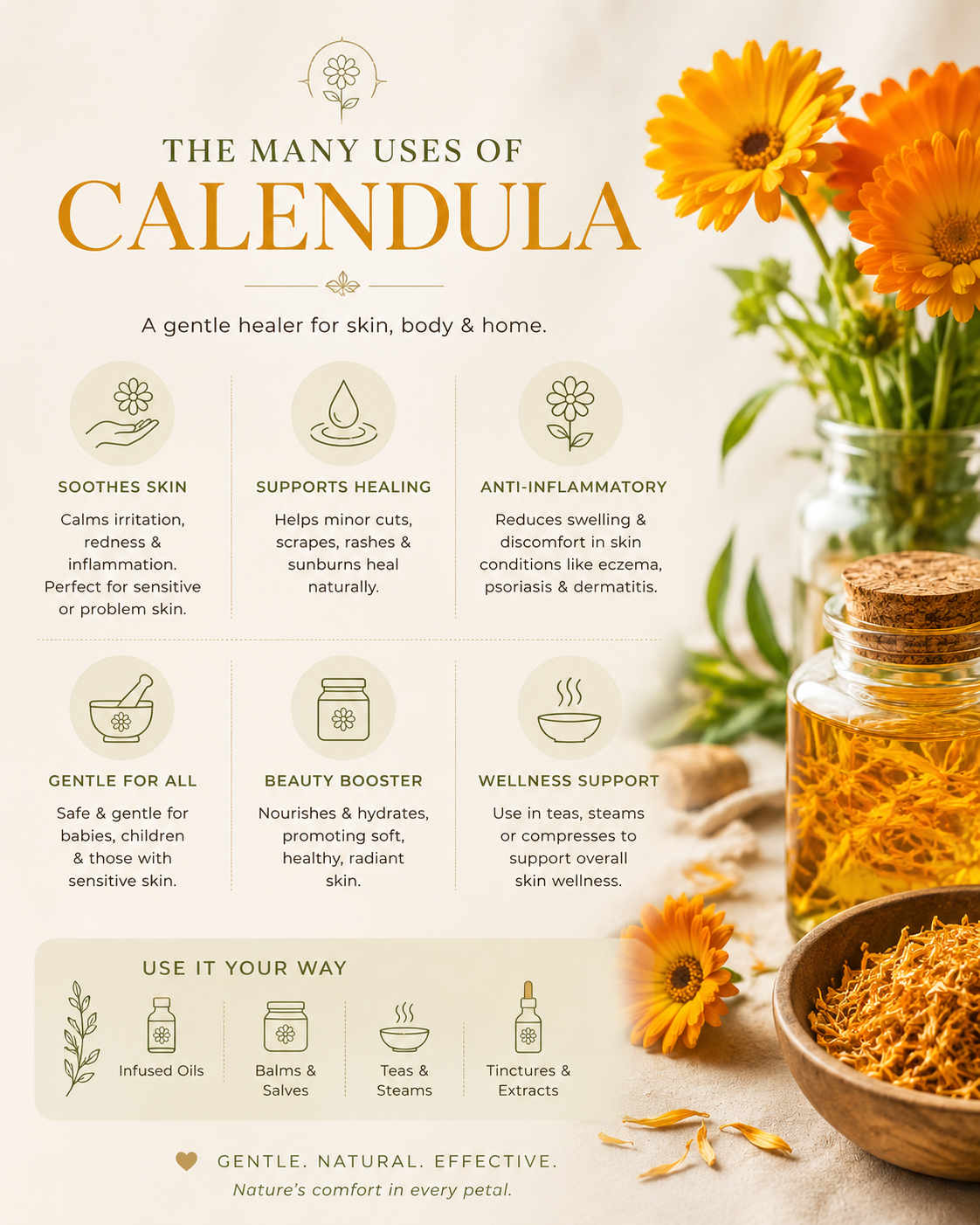
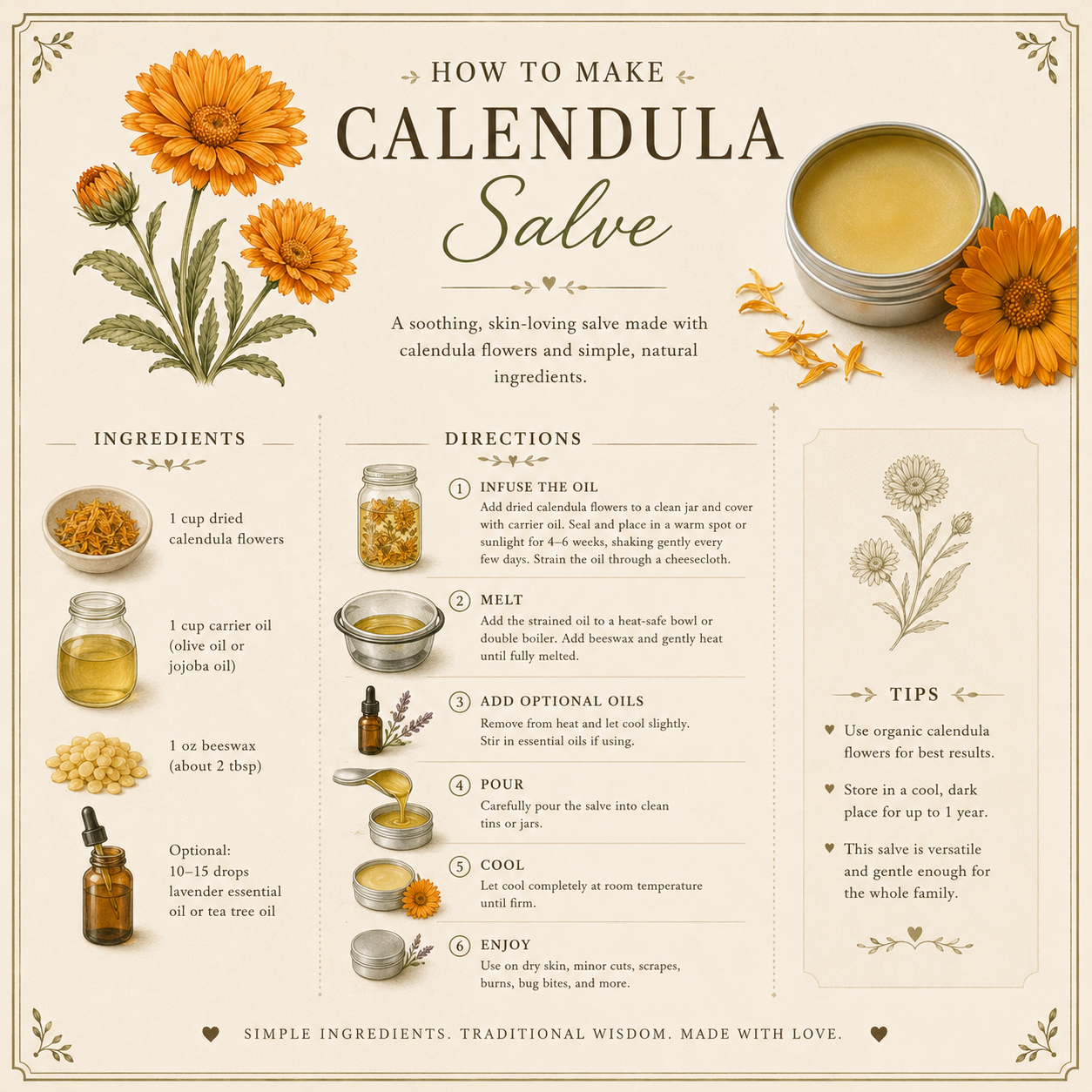
SKIN SOOTHER
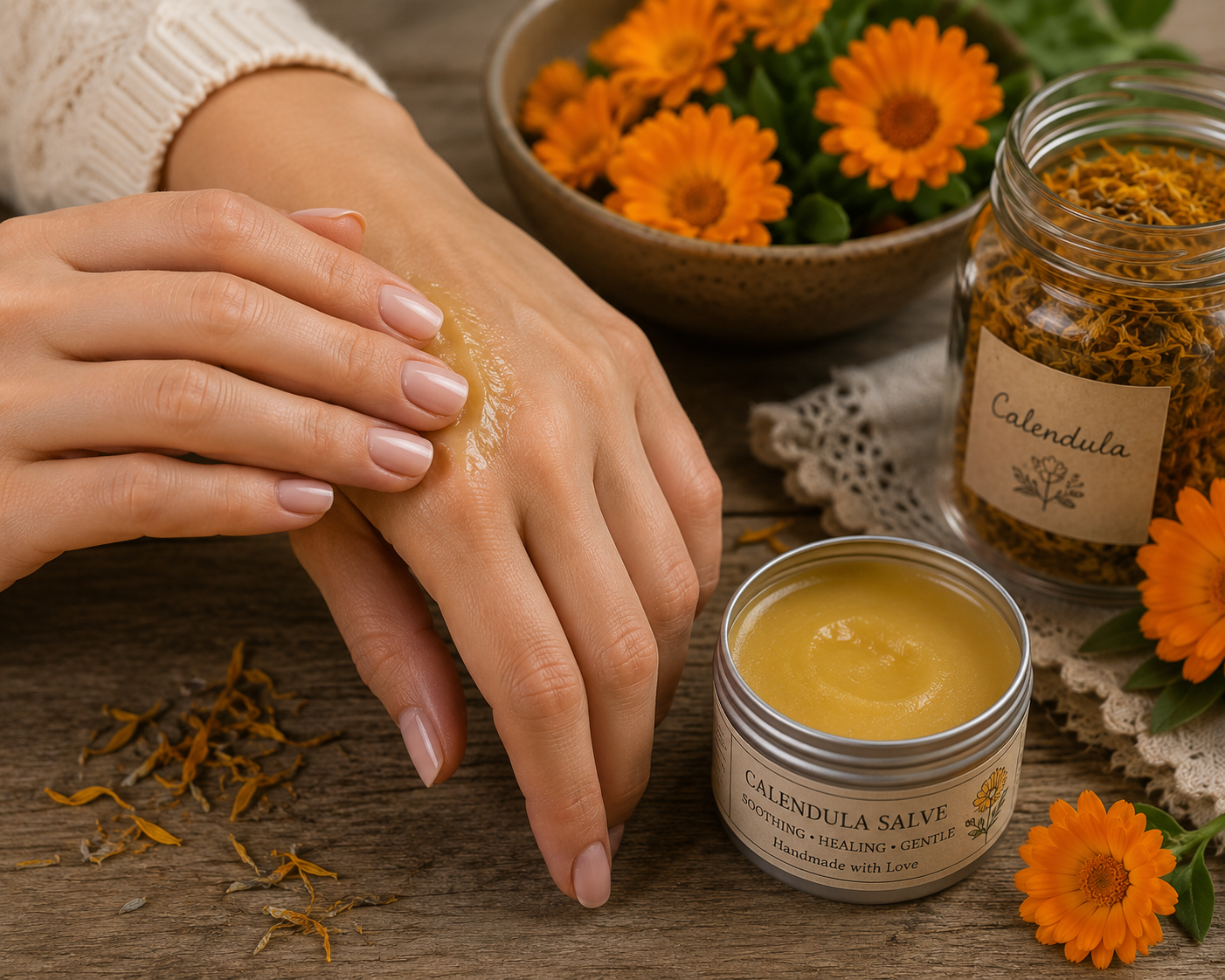
Calendula has long been valued in herbal skincare for its gentle yet powerful ability to soothe and support the skin’s natural healing process. The flower contains plant compounds such as flavonoids and triterpenoids, which may help calm redness, swelling, tenderness, and discomfort. Rich in antioxidants and anti-inflammatory compounds, calendula is commonly used in salves, creams, oils, and balms to help calm dryness, redness, irritation, and sensitive skin conditions. It is especially popular for soothing minor cuts, scrapes, burns, chapped skin, and rashes, while also helping nourish and soften the skin naturally. Its mild, comforting nature makes calendula a favorite ingredient in traditional herbal remedies and natural self-care routines.
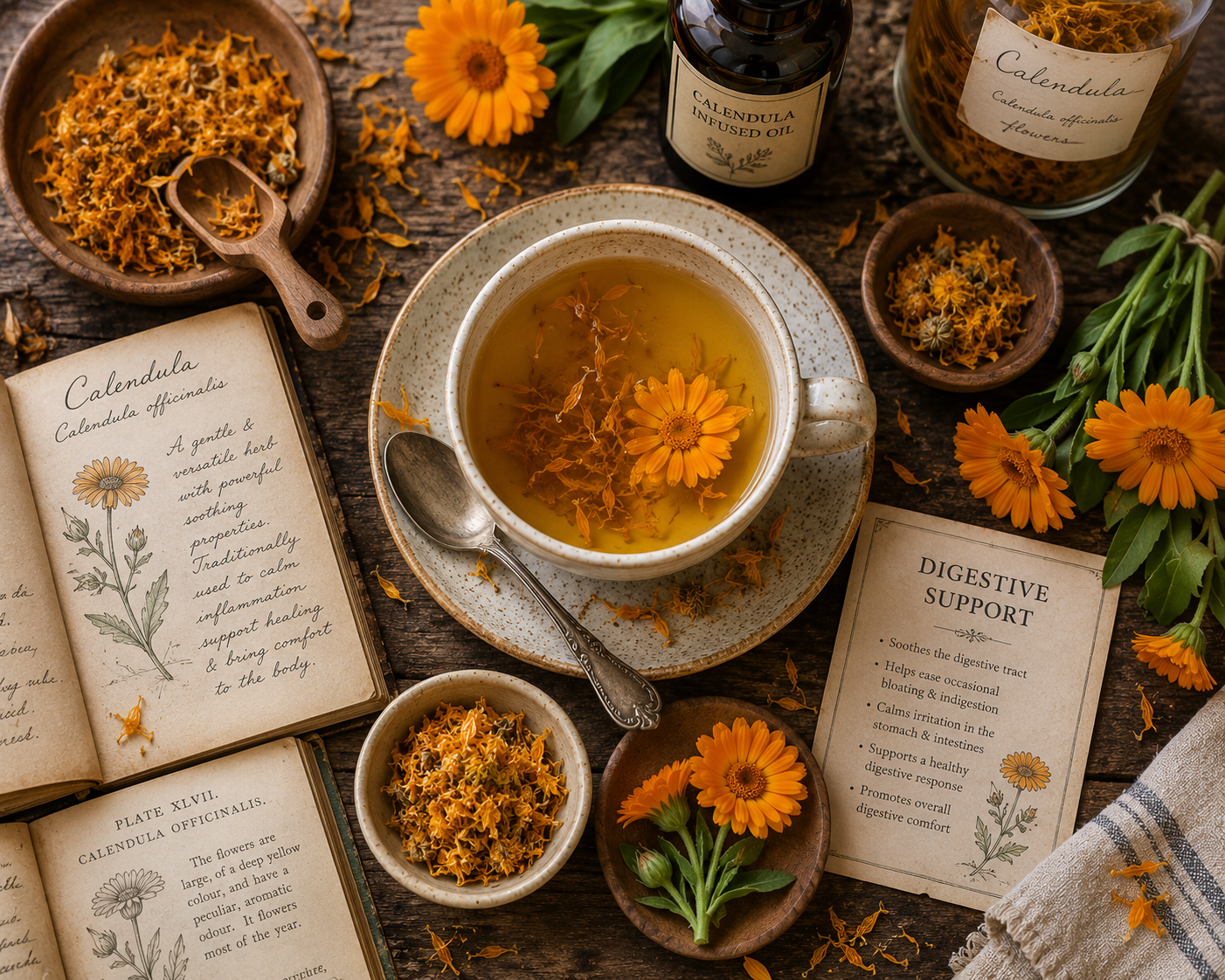
DIGESTIVE SUPPORT
Calendula has traditionally been used in herbal medicine to gently support digestive health and soothe the digestive tract. Often prepared as a tea, calendula is believed to help calm irritation and inflammation in the stomach and intestines while promoting overall digestive comfort. Herbalists have long used calendula to help ease occasional bloating, indigestion, stomach discomfort, and digestive sluggishness.
Because calendula is considered a mild and soothing herb, it is often included in calming tea blends meant to support healthy digestion and relaxation at the same time. Its gentle anti-inflammatory properties may also help support the body’s natural healing processes within the digestive system. With its warm golden petals and mild flavor, calendula tea has become a comforting herbal remedy in many traditional home apothecaries.
How to Grow Calendula
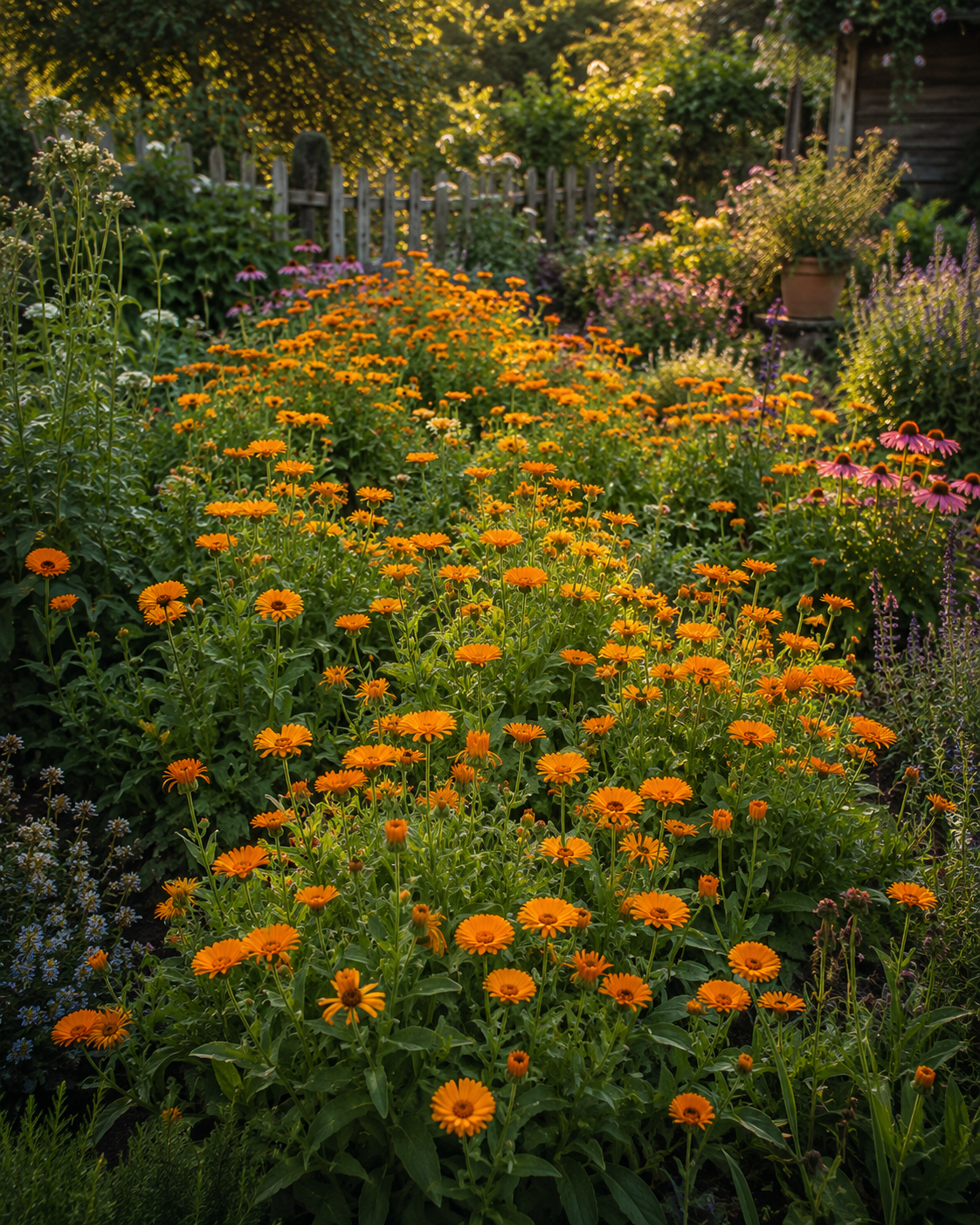
Calendula is one of the easiest and most rewarding flowers to grow, making it perfect for cottage gardens, kitchen gardens, and homestead-style spaces. These cheerful golden blooms thrive in full sun and bloom generously from late spring through fall.
Calendula loves:
Full sun (6+ hours daily)
Well-draining soil
Moderate watering
It can tolerate poor soil surprisingly well and often thrives with very little fuss.
Planting Seeds
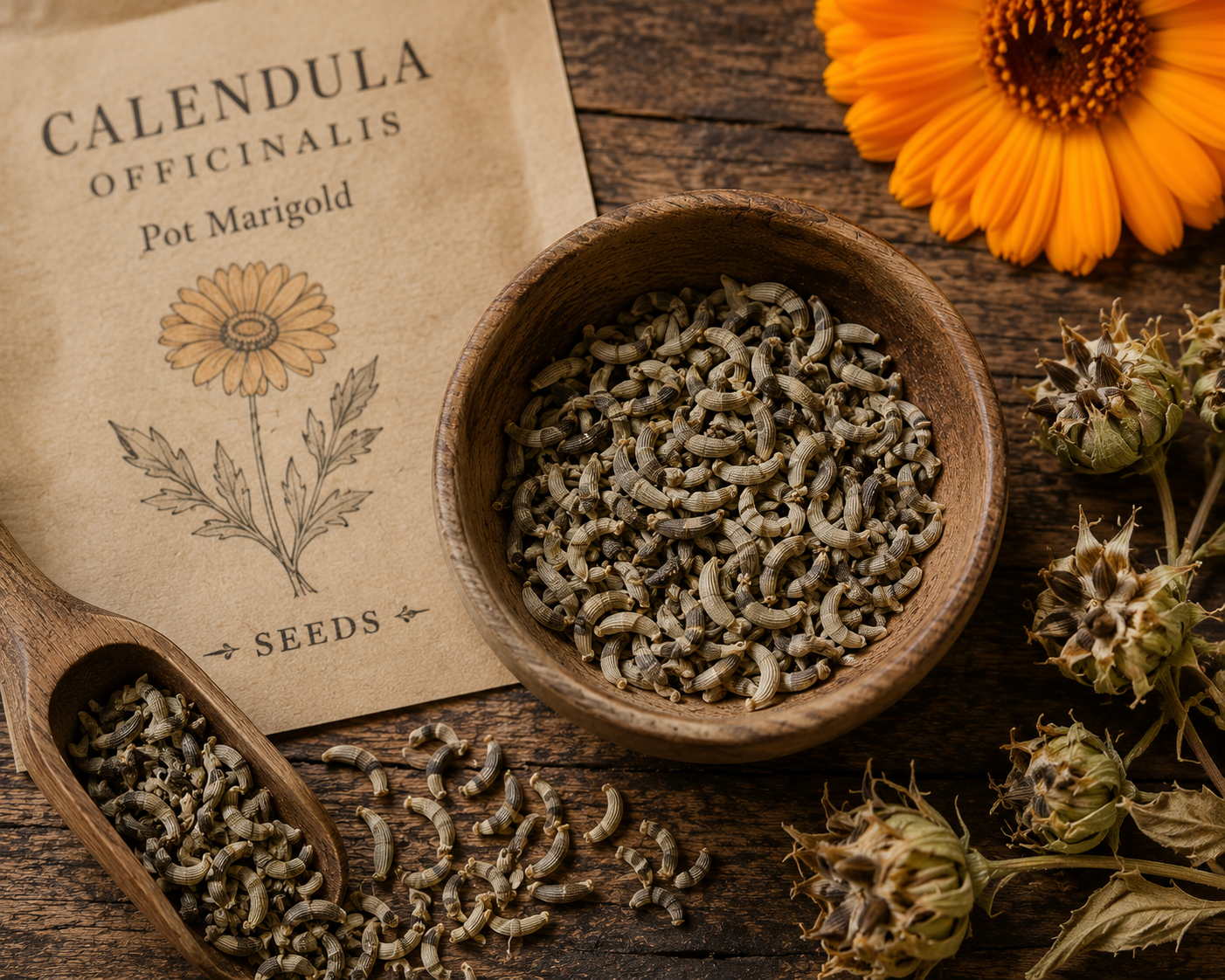
Calendula is usually grown from seed because it sprouts quickly and easily.
Sow seeds directly into the garden after the last frost
Plant seeds about ¼ inch deep
Space plants 8–12 inches apart
Seeds usually germinate in 7–14
Watering & Care
Water regularly until established
Once mature, calendula is fairly drought tolerant
Deadhead spent blooms often to encourage continuous flowering
The more you harvest flowers, the more the plant produces
How to Harvest & Preserve Calendula
Harvest calendula flowers on a warm, dry day once the blooms are fully open and vibrant. Using clean scissors or your fingers, snip the flower heads just below the base of the bloom, leaving the stems behind so the plant continues producing more flowers. Frequent harvesting actually encourages calendula to bloom even more throughout the season.
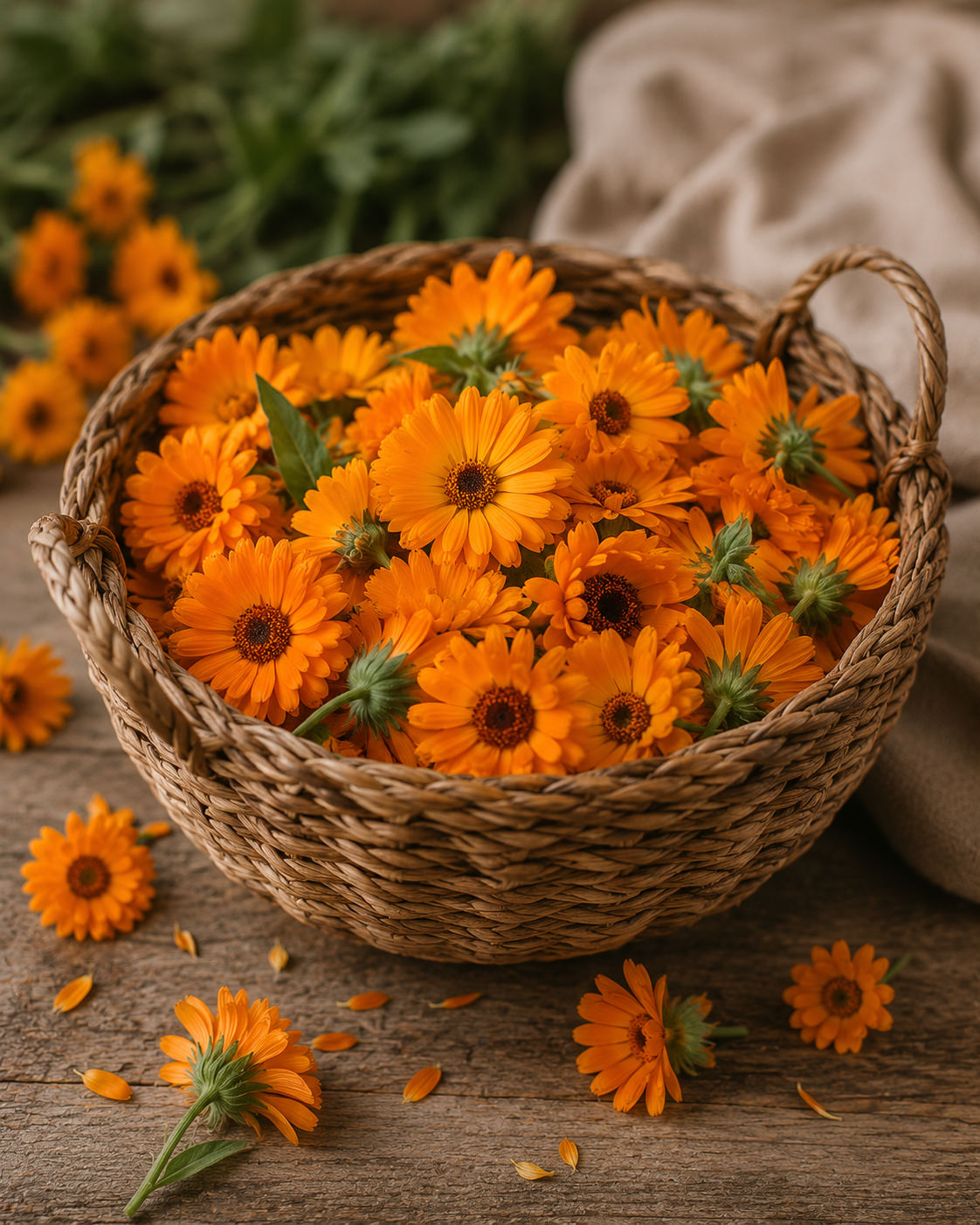
To dry calendula, spread the flower heads or petals in a single layer on a screen, tray, or drying rack in a warm, airy space away from direct sunlight. Allow them to dry completely for about 1–2 weeks until the petals feel crisp and no moisture remains. You can also use a dehydrator to speed up the process.
Once fully dried, store calendula in airtight glass jars in a cool, dark place to preserve its color and herbal properties. Properly dried calendula can last up to a year and is perfect for teas, oils, salves, and herbal remedies.
This rewarding plant would be a great way to start your herbalism journey!