
Arnica
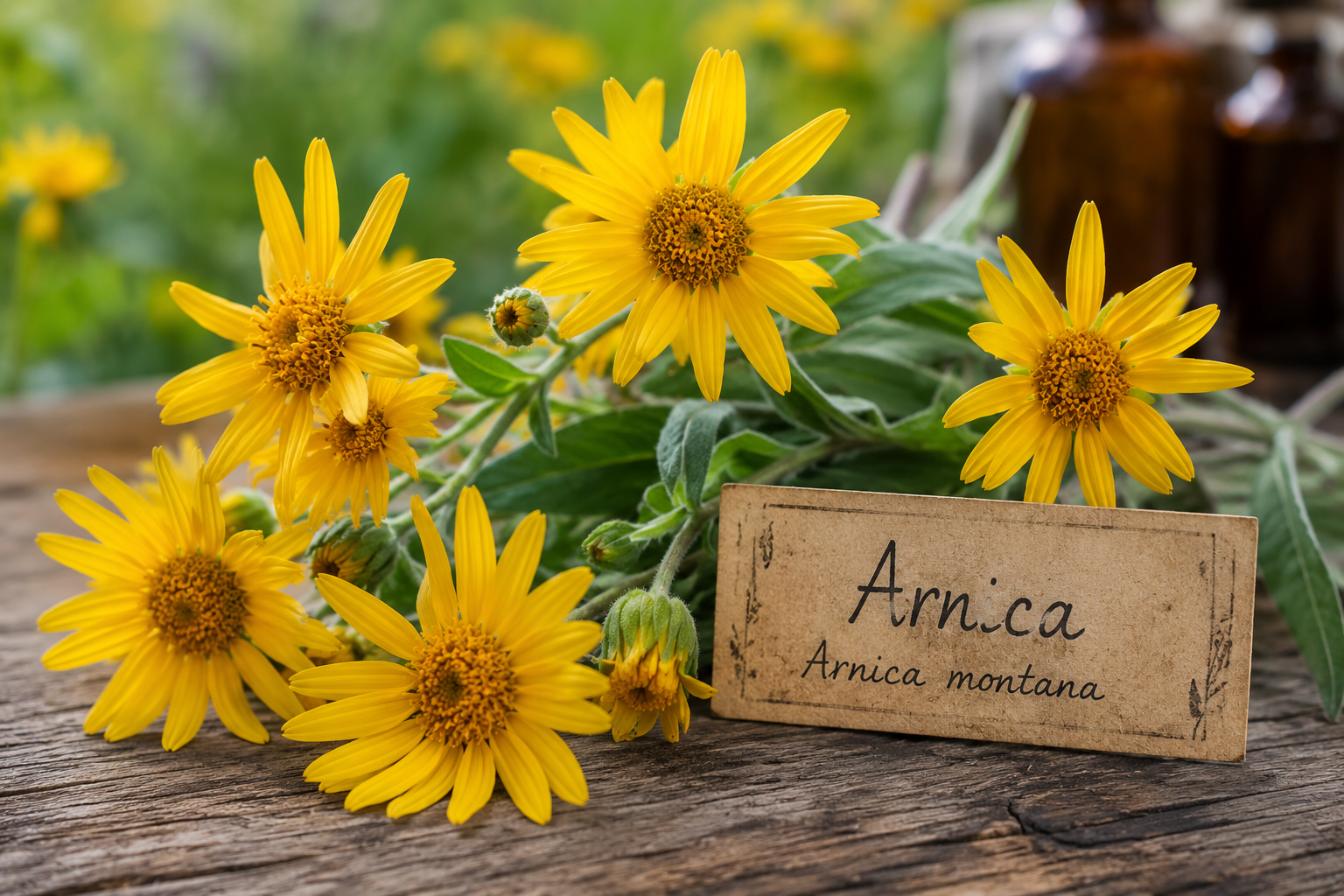
Arnica montana is a bright yellow flowering plant that has been used for centuries in European herbal medicine. Today, it is most commonly used externally in creams, salves, oils, and gels to help soothe minor aches, bruises, and inflammation.
Safety Considerations
Arnica is one of the herbs where safety is especially important.
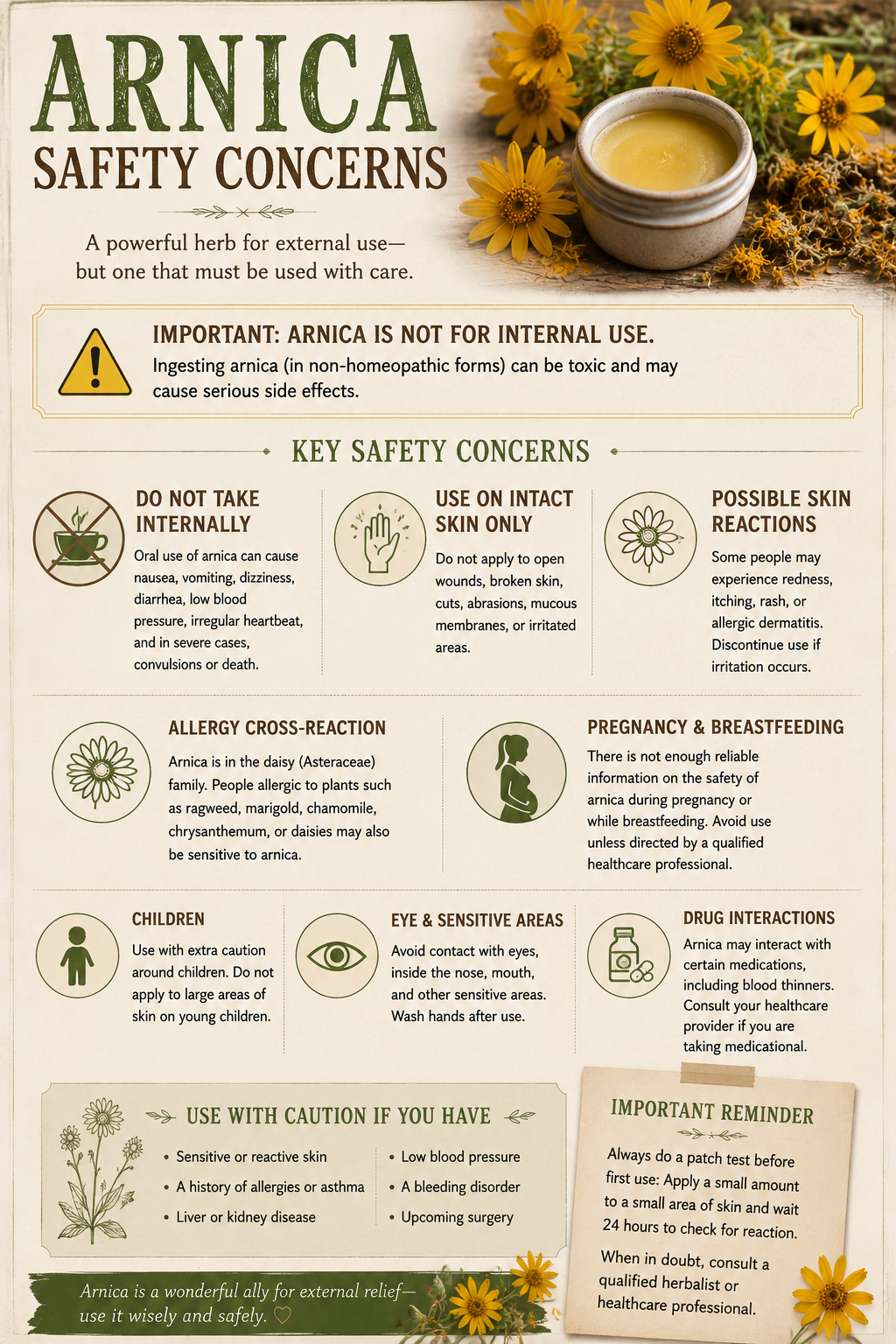
Do not consume regular herbal arnica internally.
Internal use of non-homeopathic arnica can be toxic.
It may cause serious side effects if swallowed.
Use only on unbroken skin.
Avoid applying to open wounds.
Avoid applying to deep cuts or damaged skin.
Possible skin reactions
Some individuals may develop irritation or allergic reactions, especially those sensitive to plants in the daisy family.
Pregnancy and medical conditions
Consult a qualified healthcare professional before using arnica if pregnant, nursing, or managing a medical condition.
Common Traditional Uses
Muscle Aches and Soreness
Arnica is perhaps best known for helping ease:
Overworked muscles
Exercise-related soreness
Minor strains and sprains
General stiffness
Many people apply arnica gels or salves after gardening, hiking, sports, or other physical activities.
Bruises
One of the most popular traditional uses of arnica is for:
Bruising
Black-and-blue marks
Minor bumps
Herbalists have long used arnica preparations to support the body's natural healing process following minor injuries.
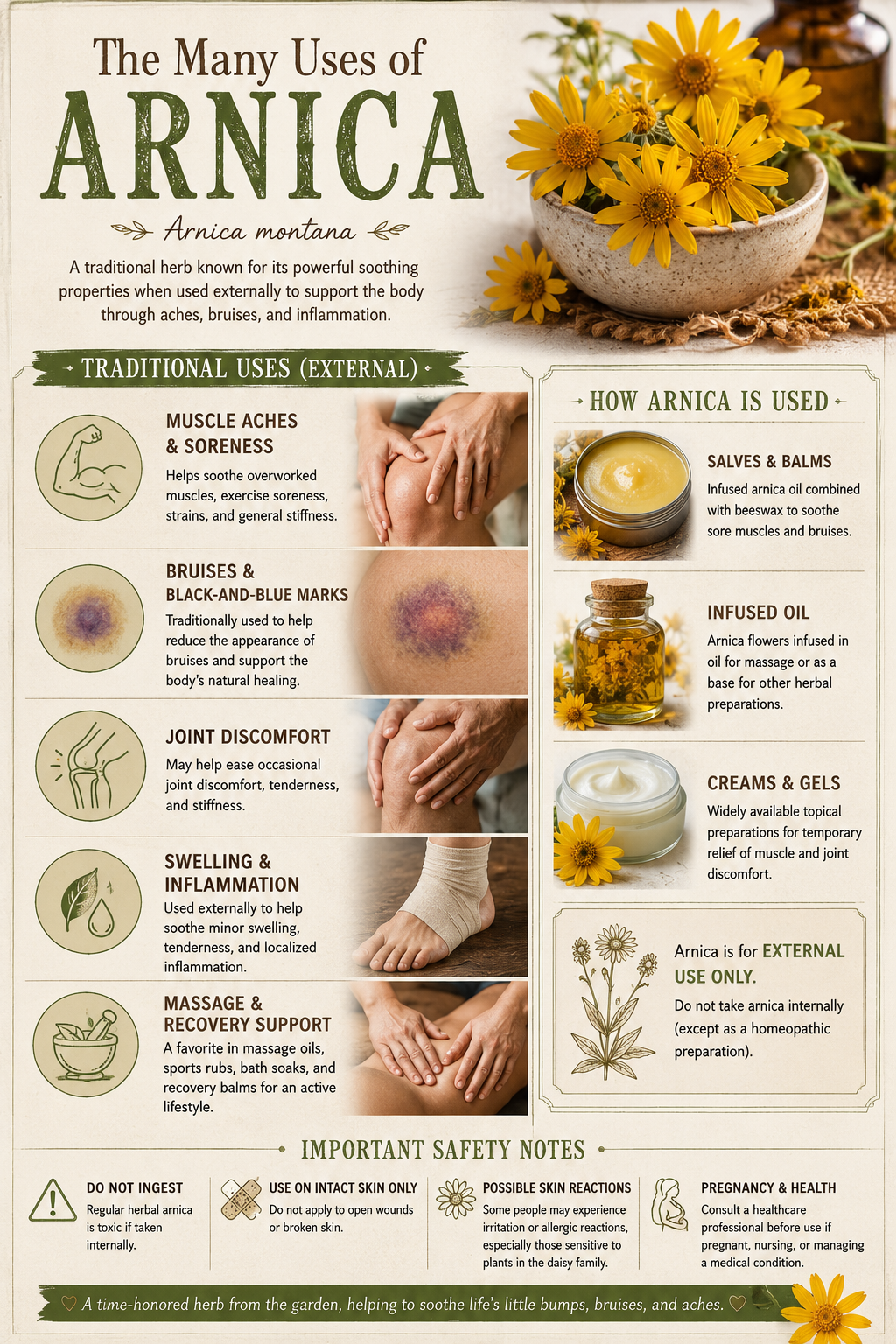
Joint Discomfort
Arnica is often incorporated into:
Massage oils
Balms
Creams
These preparations may provide temporary relief from occasional joint discomfort and stiffness.
welling and Inflammation
Traditionally, arnica has been applied externally to areas experiencing:
Minor swelling
Tenderness
Localized inflammation
It is frequently included in recovery salves designed for active lifestyles.
Massage and Recovery Products
Arnica is a common ingredient in:
Sports recovery creams
Therapeutic massage oils
Herbal muscle rubs
Bath soaks
Its warming, soothing qualities make it popular among athletes and gardeners alike.
How to Grow Arnica
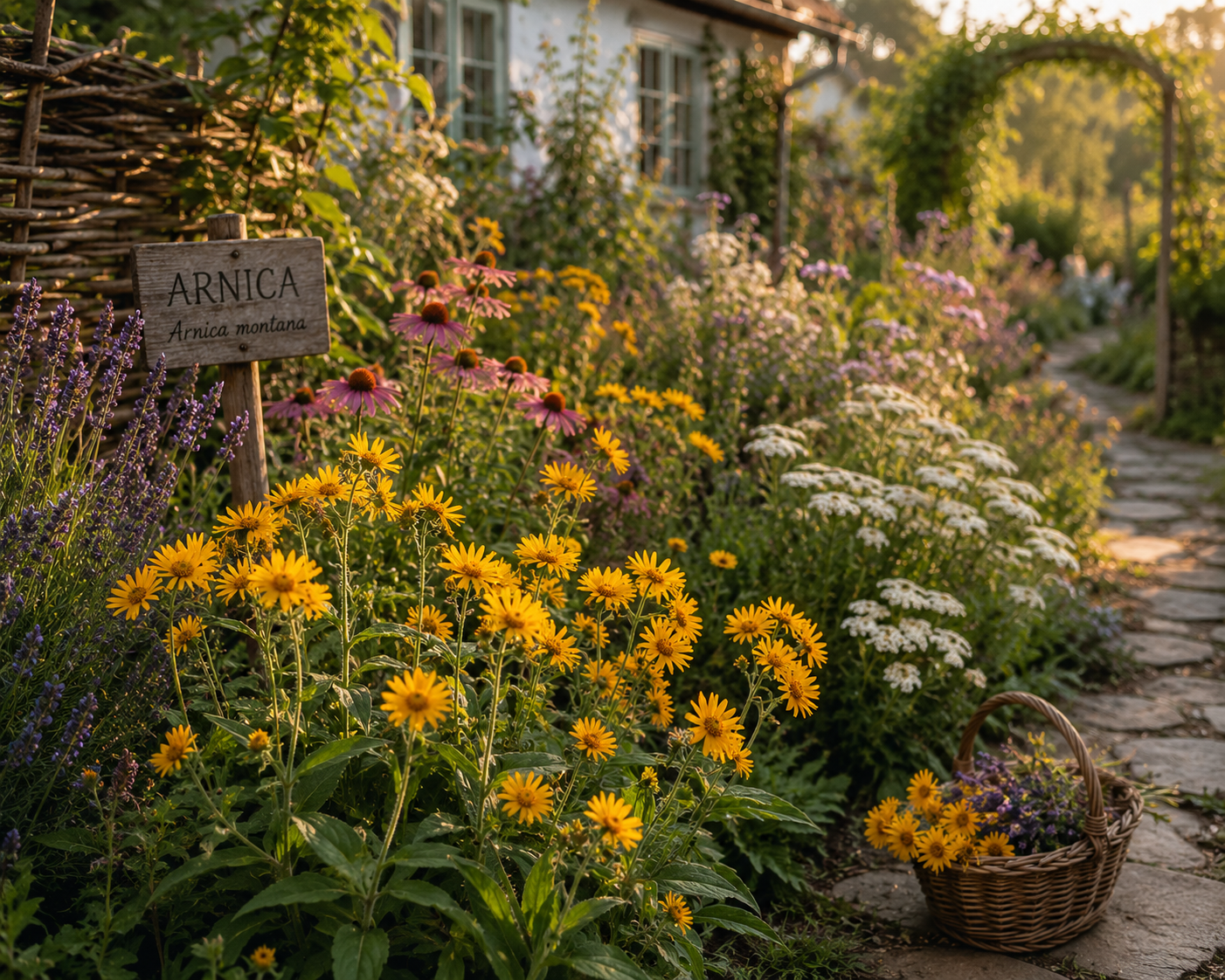
Arnica is a beautiful medicinal perennial known for its cheerful yellow daisy-like flowers. It can be a bit more challenging than herbs like calendula or echinacea because it prefers conditions similar to its native mountain meadows.
Sun Requirements
Full sun to partial shade
In hotter climates, afternoon shade is beneficial
At least 6 hours of sunlight daily is ideal
Soil Requirements
Arnica is picky about soil.
It prefers:
Well-drained soil
Slightly acidic soil (pH 5.5–6.5)
Low-fertility soil
Sandy or loamy textures
Avoid:
Heavy clay
Waterlogged areas
Rich, heavily fertilized garden beds
Watering
Keep soil consistently moist while establishing
Once established, arnica tolerates short dry periods
Do not allow roots to sit in soggy soil
A layer of natural mulch can help maintain moisture.
Benefits for the Garden
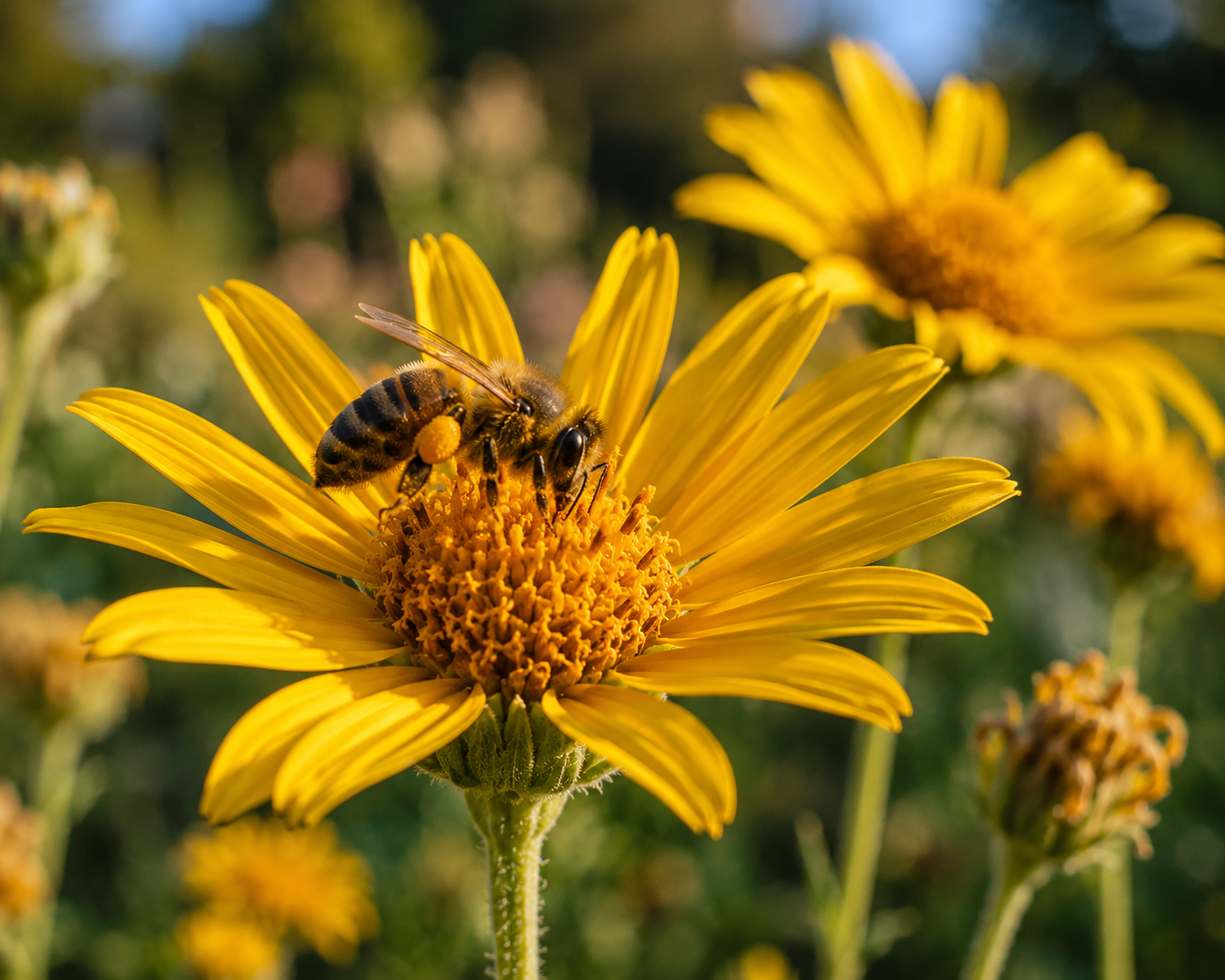
Arnica attracts:
Bees
Butterflies
Other beneficial pollinators
Starting from Seed
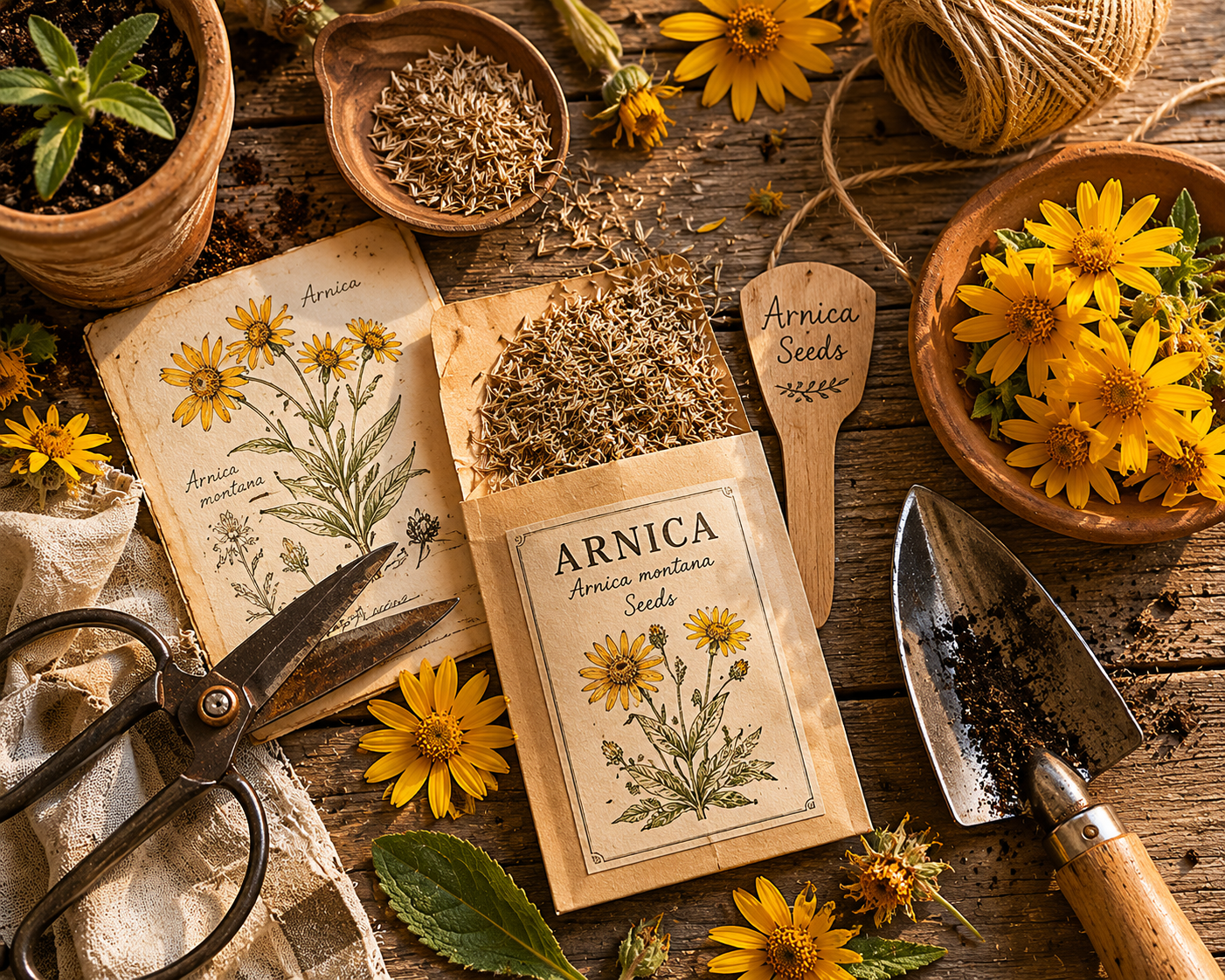
Direct Sowing
Sow in spring after danger of frost
Press seeds lightly onto soil surface
Do not bury deeply—light helps germination
Keep soil moist
Indoor Starting
Start seeds 6–8 weeks before the last frost
Many gardeners find germination improves after a period of cold stratification
Transplant carefully, as arnica dislikes root disturbance
Spacing
Space plants 12–18 inches apart
Mature plants typically grow:
12–24 inches tall
12–18 inches wide
Harvesting Flowers
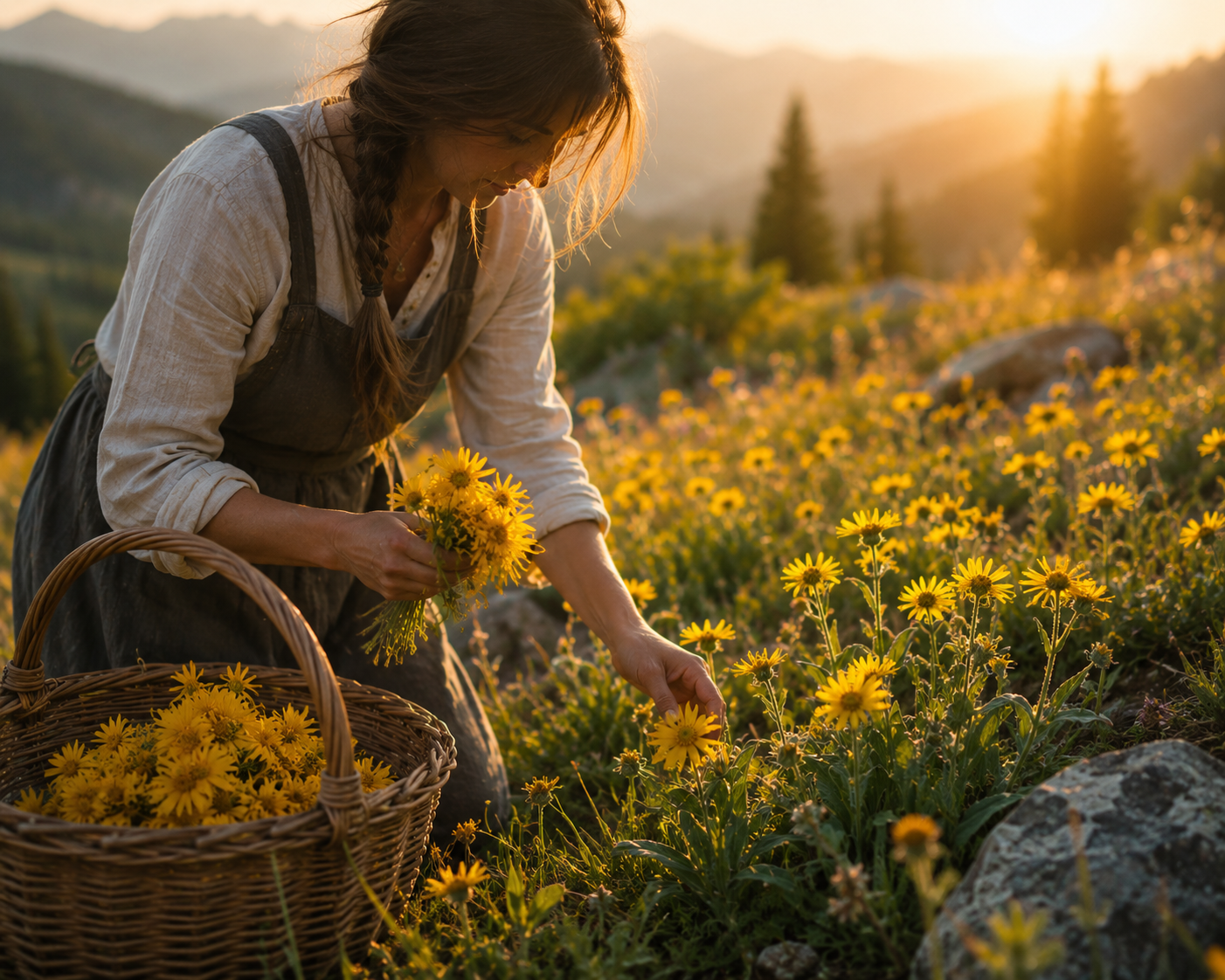
The flowers are the medicinal part most commonly used.
Harvest:
On a dry morning after dew has evaporated
When blooms are fully open
Throughout the blooming season
Use sharp scissors or garden snips rather than pulling flowers.
Drying Arnica
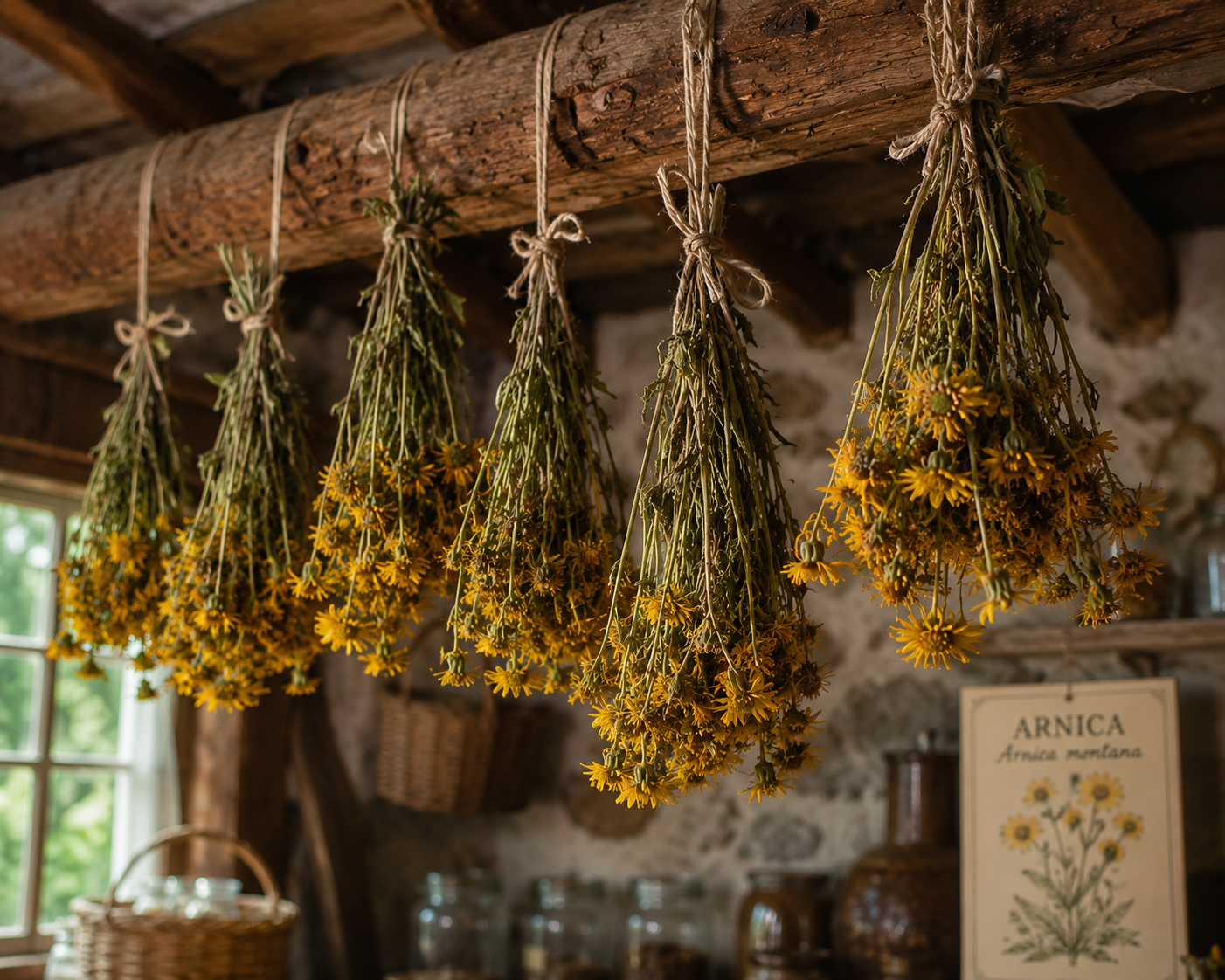
Spread flowers in a single layer on a screen or drying rack.
Keep out of direct sunlight.
Allow good air circulation.
Dry until petals feel crisp.
Store in:
Glass jars
Paper bags
Cool, dark locations
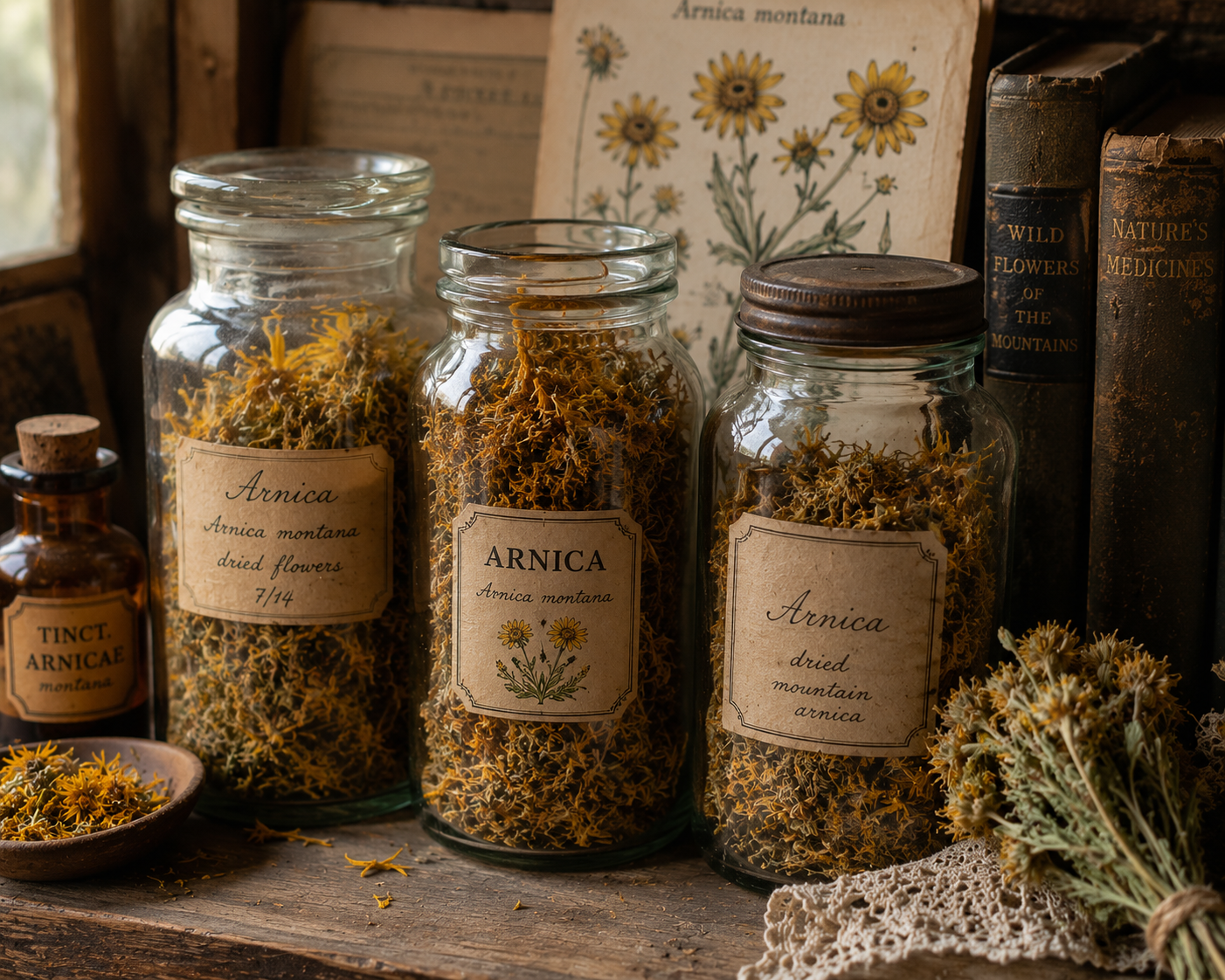
Arnica has earned its place among the most cherished herbs in the traditional herbalist’s apothecary. From its cheerful golden blossoms to its long history of use in soothing bumps, bruises, and sore muscles, this mountain wildflower offers both beauty and practical value. Whether growing in a sunny cottage garden, drying from rustic rafters, or infused into a comforting salve, arnica reminds us of the simple wisdom found in nature’s remedies. As with all medicinal herbs, it should be used thoughtfully and with respect, allowing its remarkable qualities to be enjoyed safely for generations to come.