Echinacea
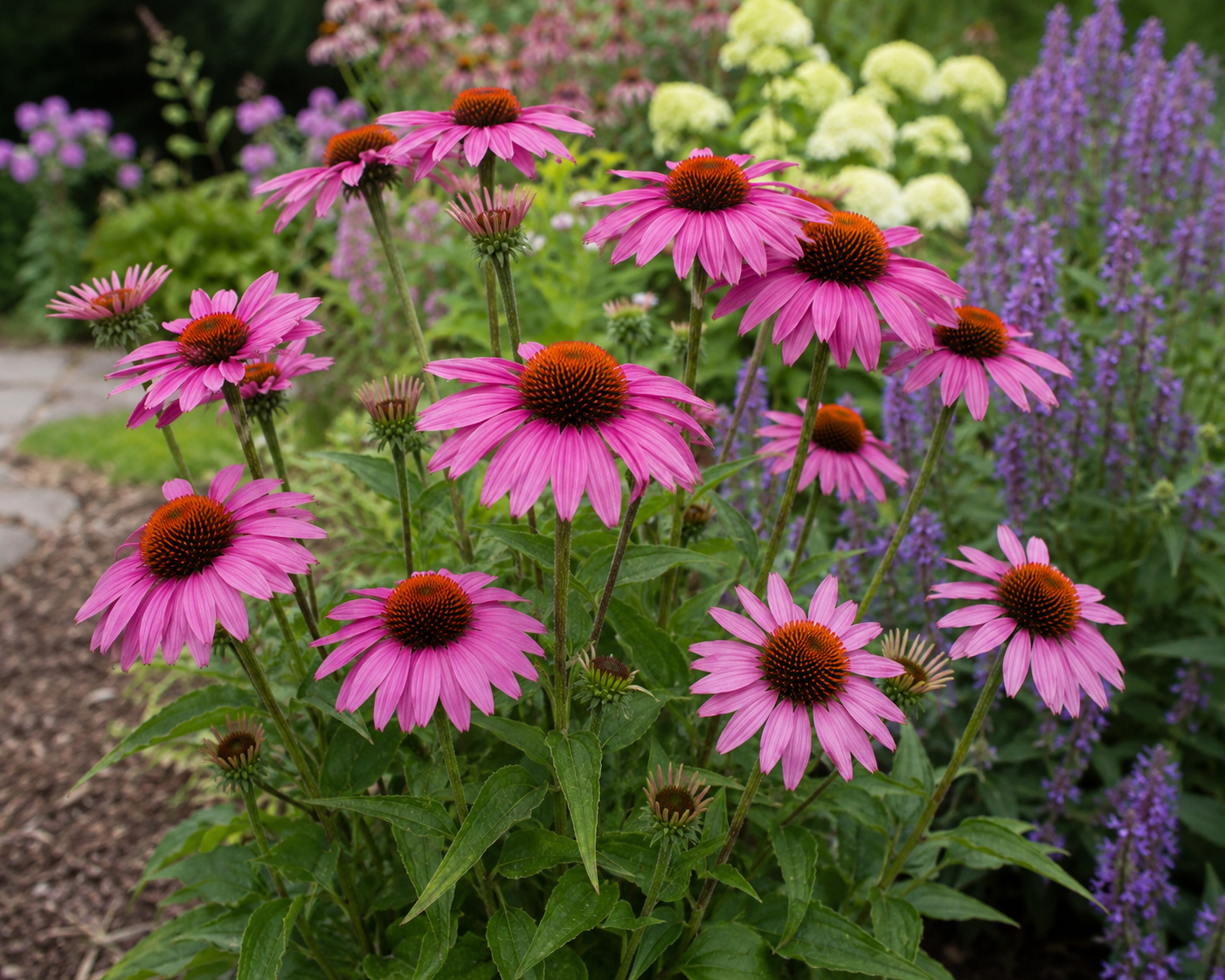
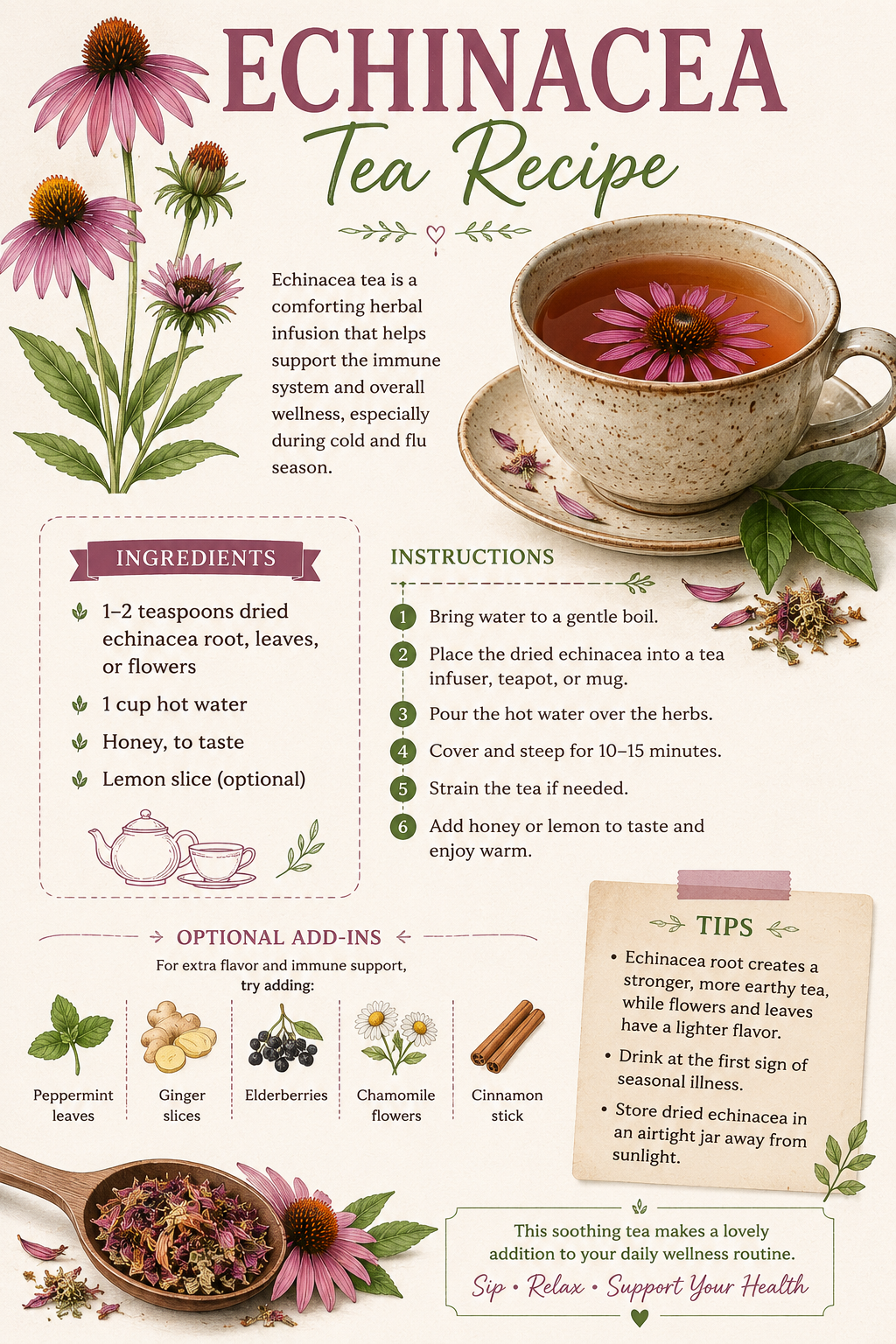
Echinacea, also known as coneflower, is a beautiful and hardy perennial herb best known for its large daisy-like purple blooms and long history in traditional herbal medicine. Native to the prairies and open woodlands of North America, echinacea has been treasured for centuries for both its healing properties and its ability to attract pollinators like bees and butterflies to the garden.
Indigenous peoples, including the Plains tribes, traditionally used echinacea for a wide range of ailments, from infections and sore throats to wounds and toothaches, making it one of the most respected medicinal plants in North American herbal history. Today, gardeners continue to grow echinacea not only for its striking beauty but also for its many herbal uses. The roots, flowers, and leaves are commonly used in teas, tinctures, salves, and infused remedies that support the immune system and overall wellness. Easy to grow and wonderfully resilient, echinacea is a rewarding addition to both medicinal herb gardens and cottage-style landscapes, offering beauty, pollinator support, and natural healing all in one plant.
Immune Health
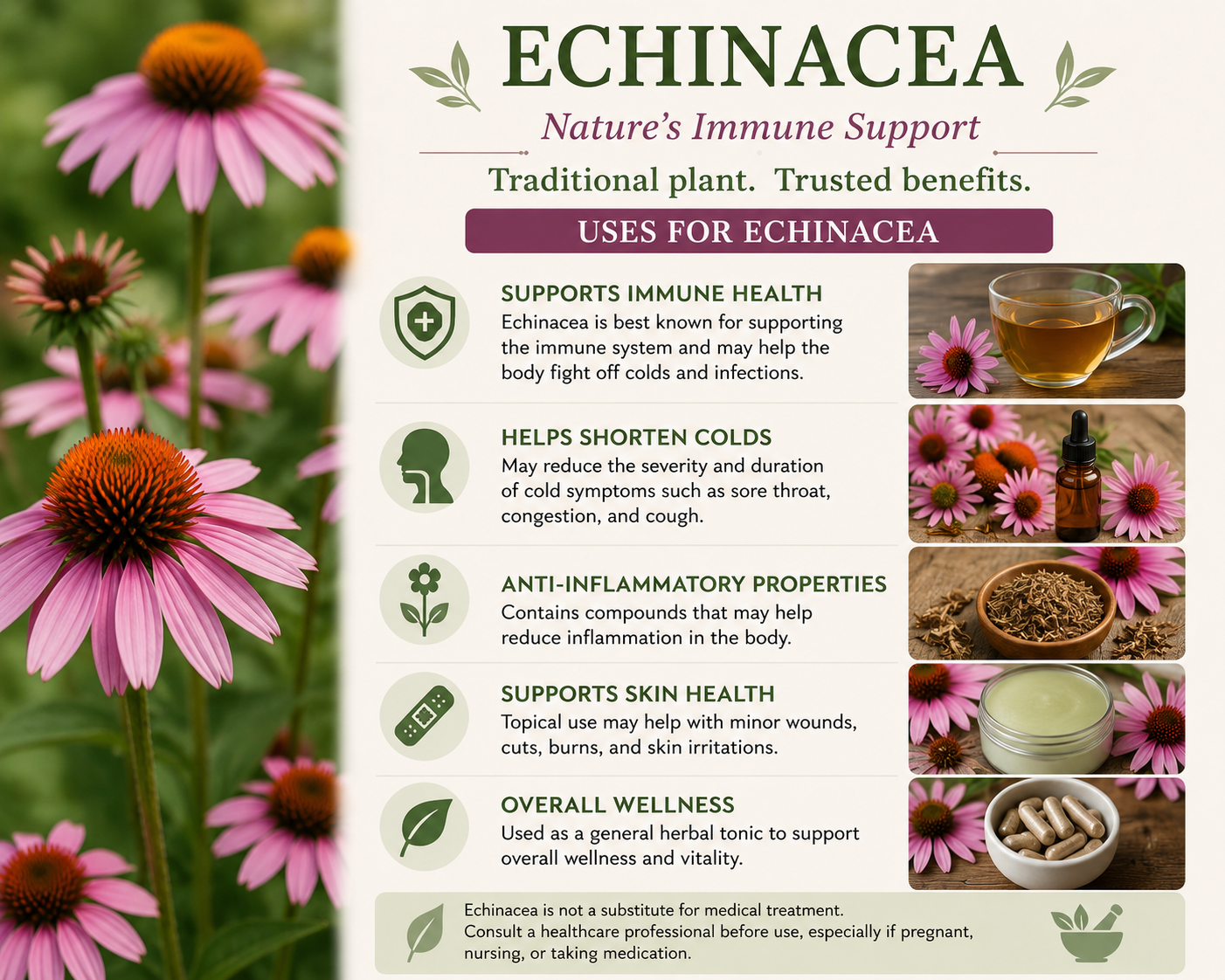
Echinacea is best known for its ability to support the immune system and help the body respond to seasonal illnesses naturally. The plant contains active compounds such as alkamides, polysaccharides, and antioxidants that are believed to stimulate immune activity and support the body’s natural defenses.
Many people use echinacea at the first signs of a cold, sore throat, or seasonal illness because it may help the immune system respond more efficiently. Some studies suggest that echinacea can help reduce the severity and duration of common cold symptoms, especially when taken early. Herbalists traditionally use it to support the body during times of stress, fatigue, or increased exposure to illness.
Echinacea is thought to work by encouraging the activity of white blood cells, which help fight infections and remove harmful pathogens from the body. Its natural anti-inflammatory and antioxidant properties may also help calm irritation and support overall wellness while the immune system is under strain.
Skin Care
Echinacea has a long history of topical use for supporting healthy skin. While it is most famous as an immune-supporting herb, herbalists have traditionally used echinacea-infused oils, salves, creams, and poultices to help soothe and protect the skin.
Supports Minor Wound Care
Traditionally, echinacea was applied to:
Scrapes and cuts
Minor burns
Insect bites
Skin irritations
Its natural compounds may help support the skin's healing process and maintain healthy tissue.
Soothes Irritated Skin
Echinacea is often included in herbal skin care products because of its anti-inflammatory properties. It may help calm:
Redness
Dryness
Itchy skin
Environmental irritation
Rich in Antioxidants
The plant contains antioxidants that help protect the skin from oxidative stress caused by environmental factors. Antioxidants are valued in natural skincare because they support healthy-looking skin and may help maintain a youthful appearance.
Used in Herbal Salves and Creams
Many herbalists prepare echinacea as:
Infused oils
Healing salves
Herbal balms
Skin creams
Facial serums
These preparations are often combined with other skin-loving herbs such as calendula, plantain, chamomile, and lavender.
Traditional Herbal Poultices
Fresh or dried echinacea has historically been made into poultices and compresses that were applied directly to the skin for localized support.
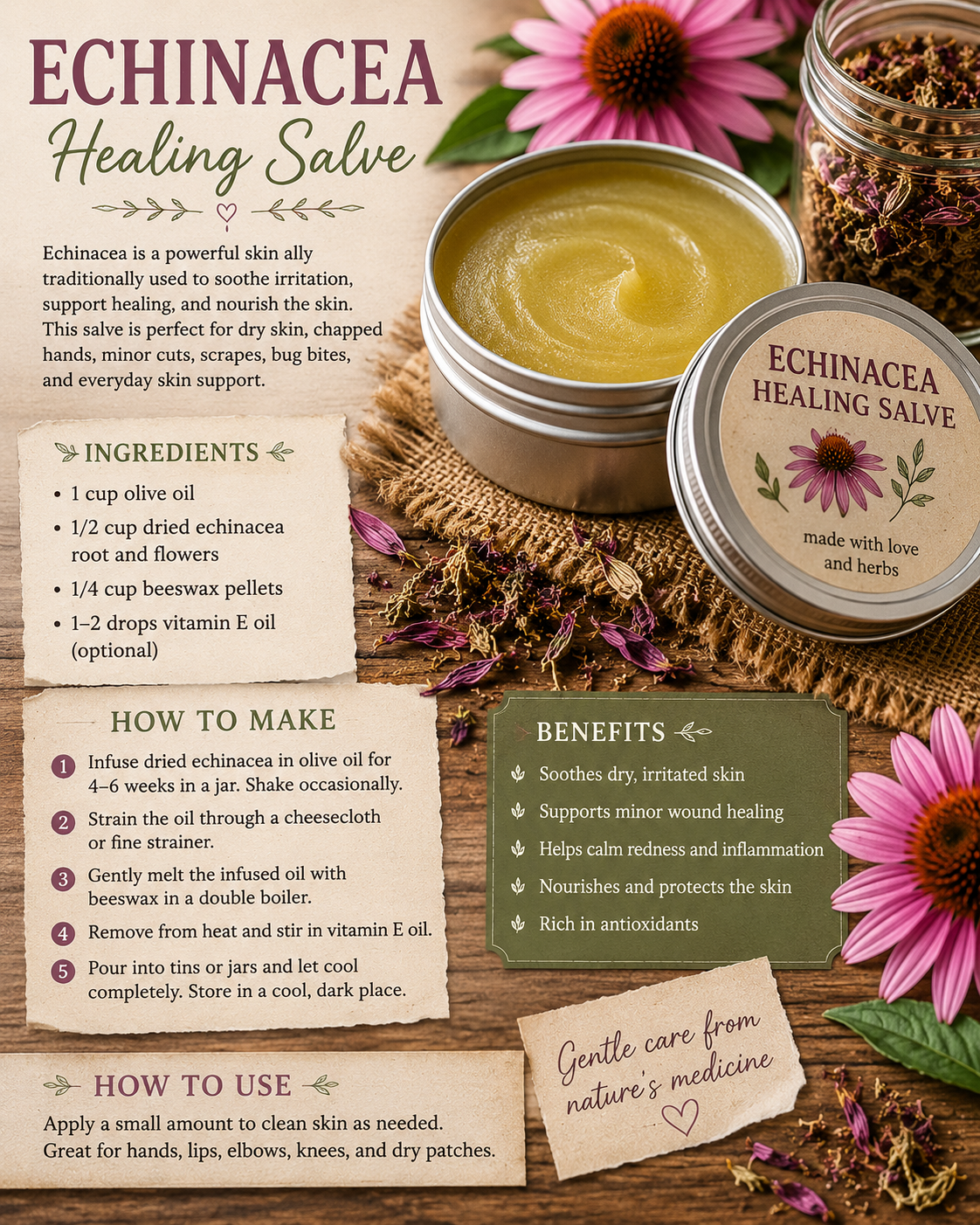
Simple Echinacea Skin Salve
A basic herbal salve can be made by:
Infusing dried echinacea flowers and roots in olive oil for several weeks.
Straining the oil.
Melting the infused oil with beeswax.
Pouring into tins or jars to cool.
The result is a soothing herbal salve that can be used on dry elbows, rough hands, and minor skin irritations.
Growing Echinacea
is one of the easiest medicinal herbs to grow. Native to the North American prairie, it thrives in tough conditions, tolerates drought, attracts pollinators, and returns year after year.
Hardiness
USDA Zones 3–9
Perennial (comes back each year)
Blooms from midsummer into fall
Lives for many years once established
Choosing a Location
Echinacea loves:
Full sun (6–8+ hours daily)
Well-drained soil
Good air circulation
It tolerates poor soil surprisingly well and often performs better in average garden soil than in rich, heavily fertilized beds.
Starting from Seed
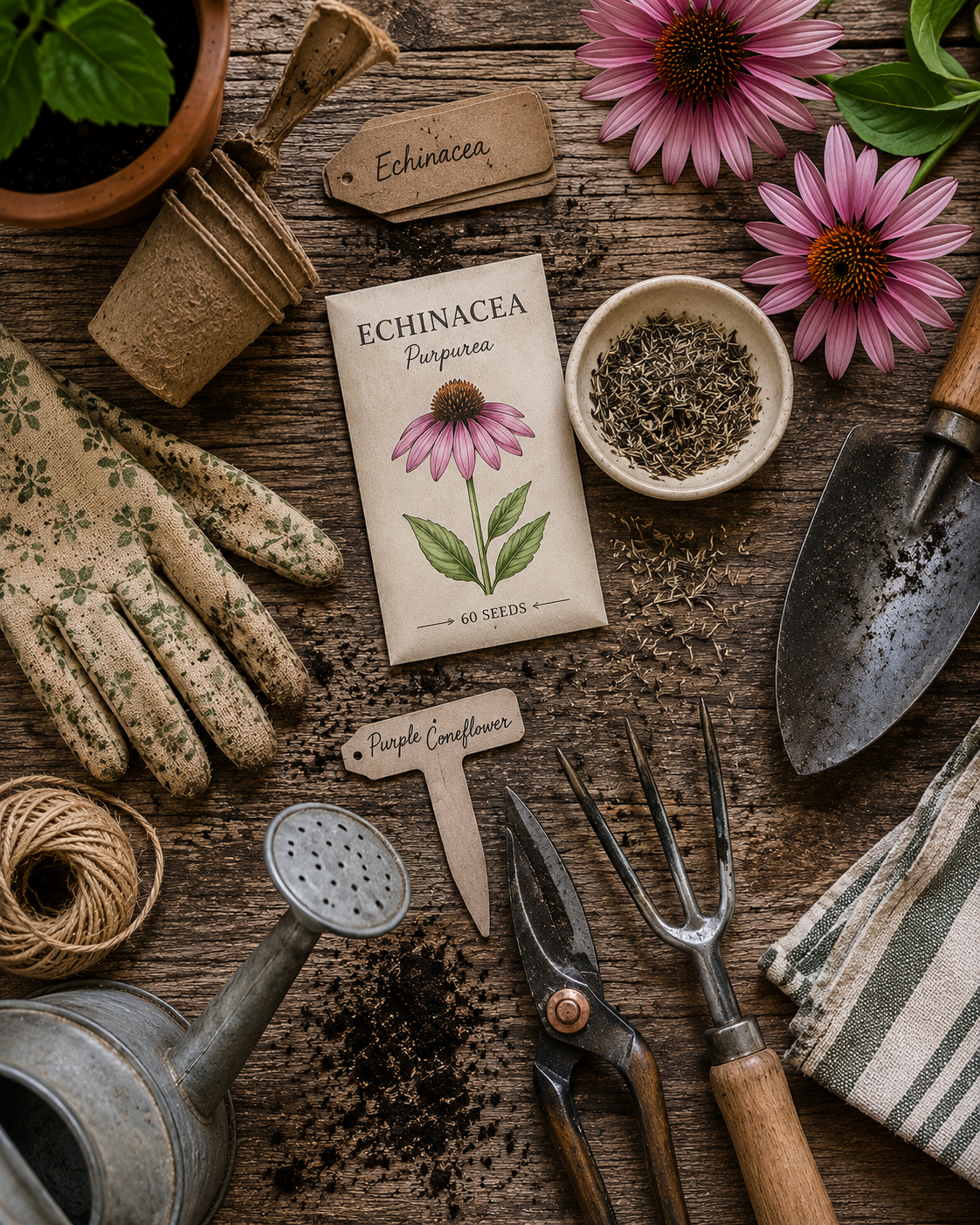
Direct Sowing Outdoors
Sow seeds in spring after danger of frost has passed, or in fall.
Press seeds lightly into the soil.
Cover very lightly, as seeds need some light to germinate.
Keep evenly moist until seedlings emerge.
Germination typically takes:
10–20 days
Soil temperature around 65–70°F (18–21°C)
Cold Stratification Improves Germination
For best results:
Place seeds in a damp paper towel.
Seal in a plastic bag.
Refrigerate for 4–6 weeks.
Sow afterward.
This mimics winter conditions and often improves germination rates.
Plant Spacing
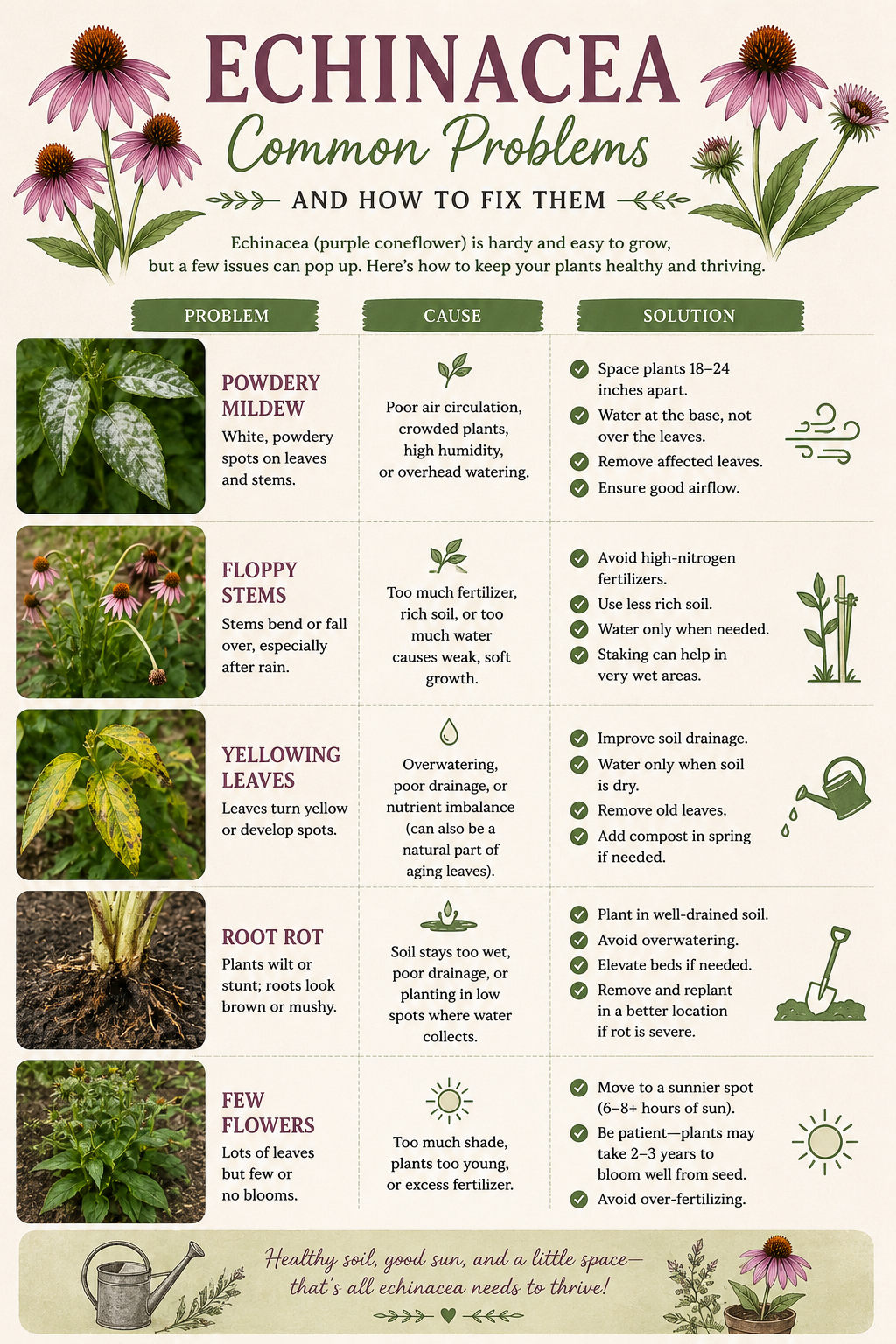
Space plants 18–24 inches apart.
Mature plants reach 2–5 feet tall depending on variety.
Watering
First year:
Water regularly while establishing roots.
Established plants:
Water during prolonged drought.
Generally drought tolerant once mature.
Fertilizing
Echinacea rarely needs fertilizer.
Too much fertilizer can produce:
Floppy growth
Fewer flowers
Reduced medicinal quality
A light application of compost in spring is usually plenty.
Harvesting for Herbal Use
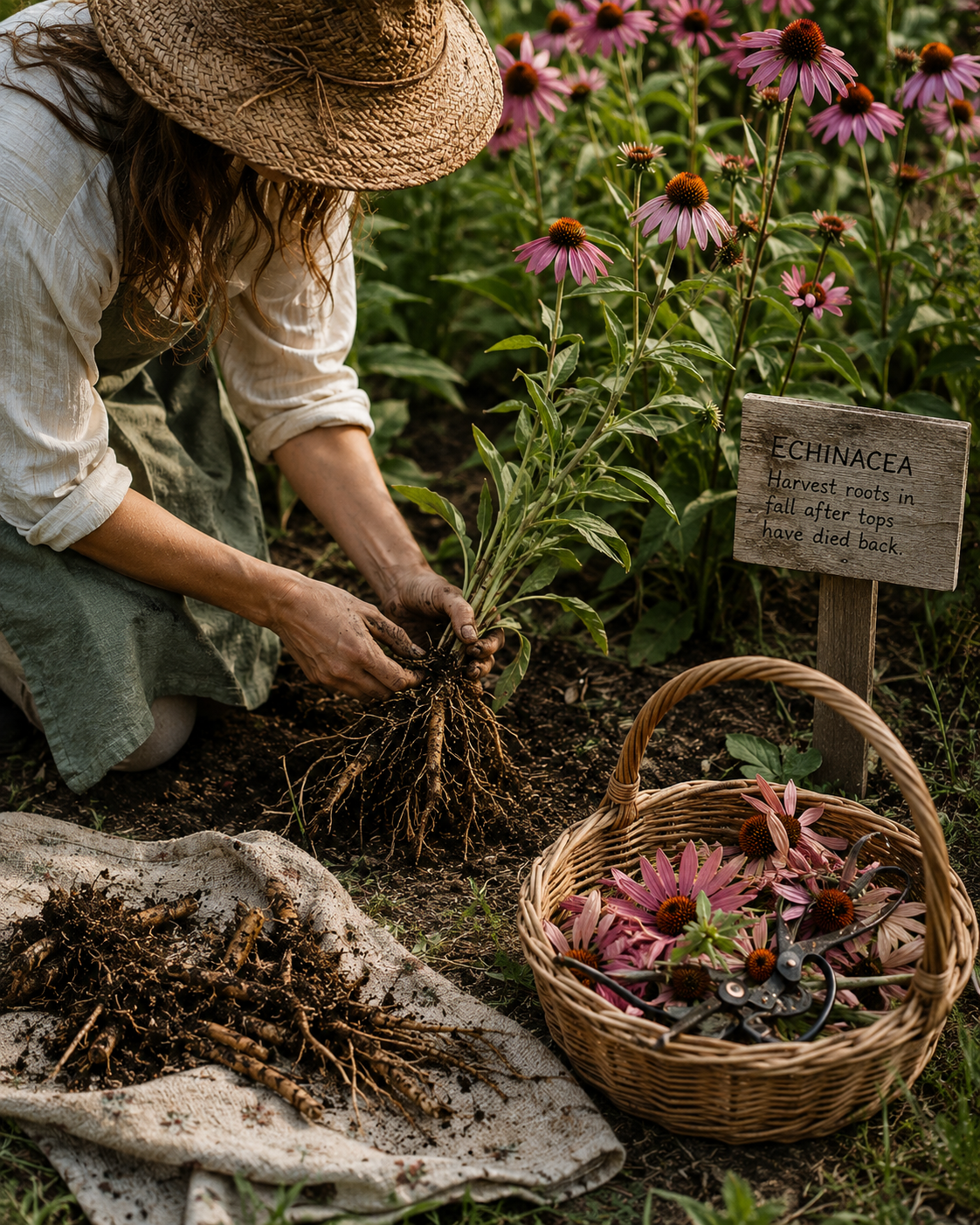
Flowers
Harvest freshly opened blooms throughout summer.
Dry in a warm, well-ventilated location.
Leaves
Harvest before or during flowering.
Roots
Wait until plants are at least 3 years old.
Dig roots in autumn after the tops die back.
Wash, chop, and dry thoroughly.
The roots are often considered the most potent medicinal part, though flowers and leaves are commonly used as well.
Echinacea is one of my favorite flowers to grow and use. It’s easy to grow and the benefits from this little herb are immense. If you’re just getting your garden growing, put echinacea at the top of your list.