

Agrimony
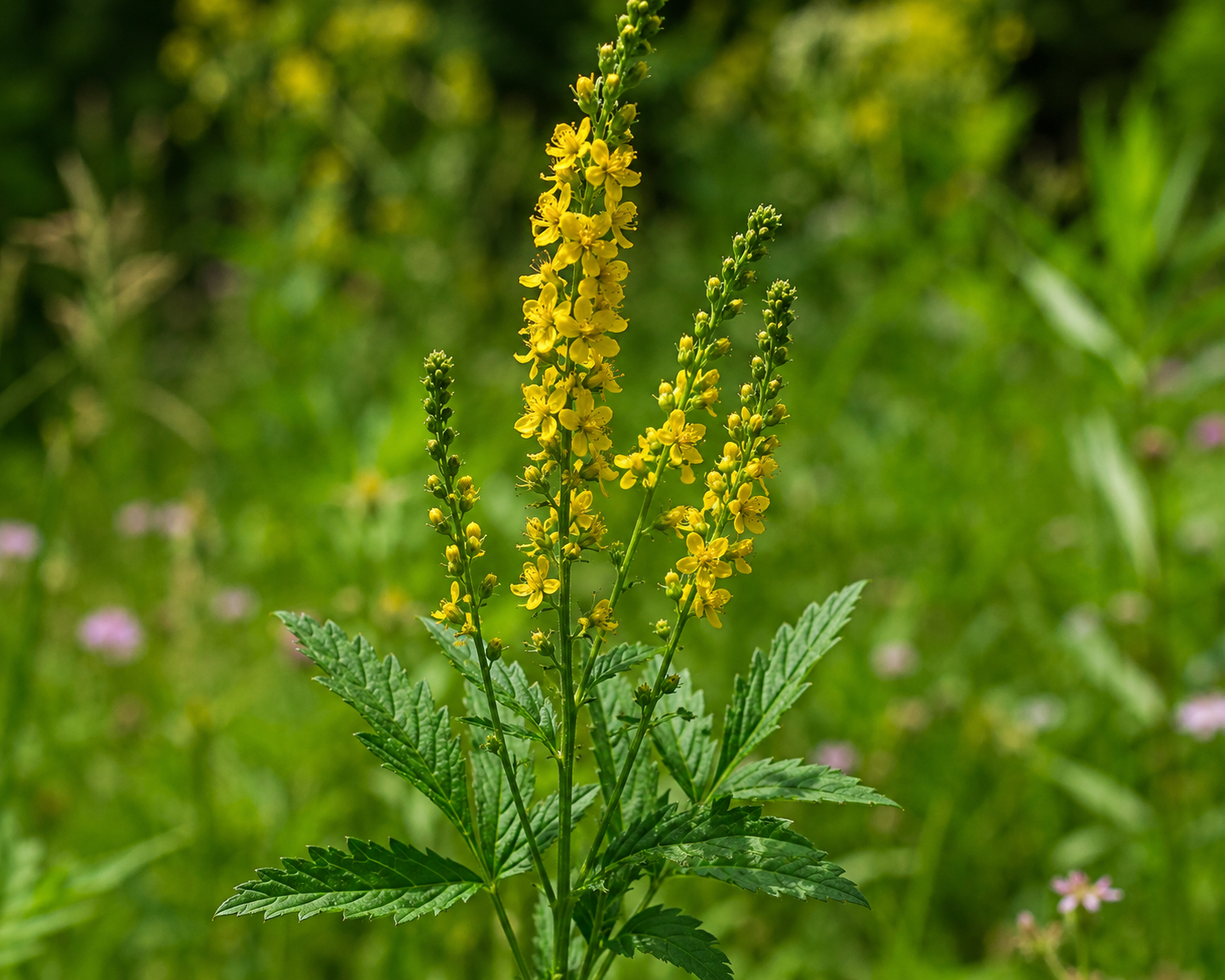
There’s something wonderfully old-fashioned about agrimony. With its tall spikes of sunny yellow flowers and softly serrated leaves, this humble herb has been treasured for centuries in traditional herbal medicine. Often growing quietly along roadsides and meadow edges, agrimony may look delicate, but herbalists have long valued it as a powerful plant ally for digestion, skin care, sore throats, and overall wellness.
Known botanically as Agrimonia eupatoria, agrimony belongs to the rose family and has been used in folk remedies dating all the way back to ancient Greece. In medieval times, it was considered a healing herb for wounds and digestive complaints, and it was commonly brewed into teas, poultices, and washes.
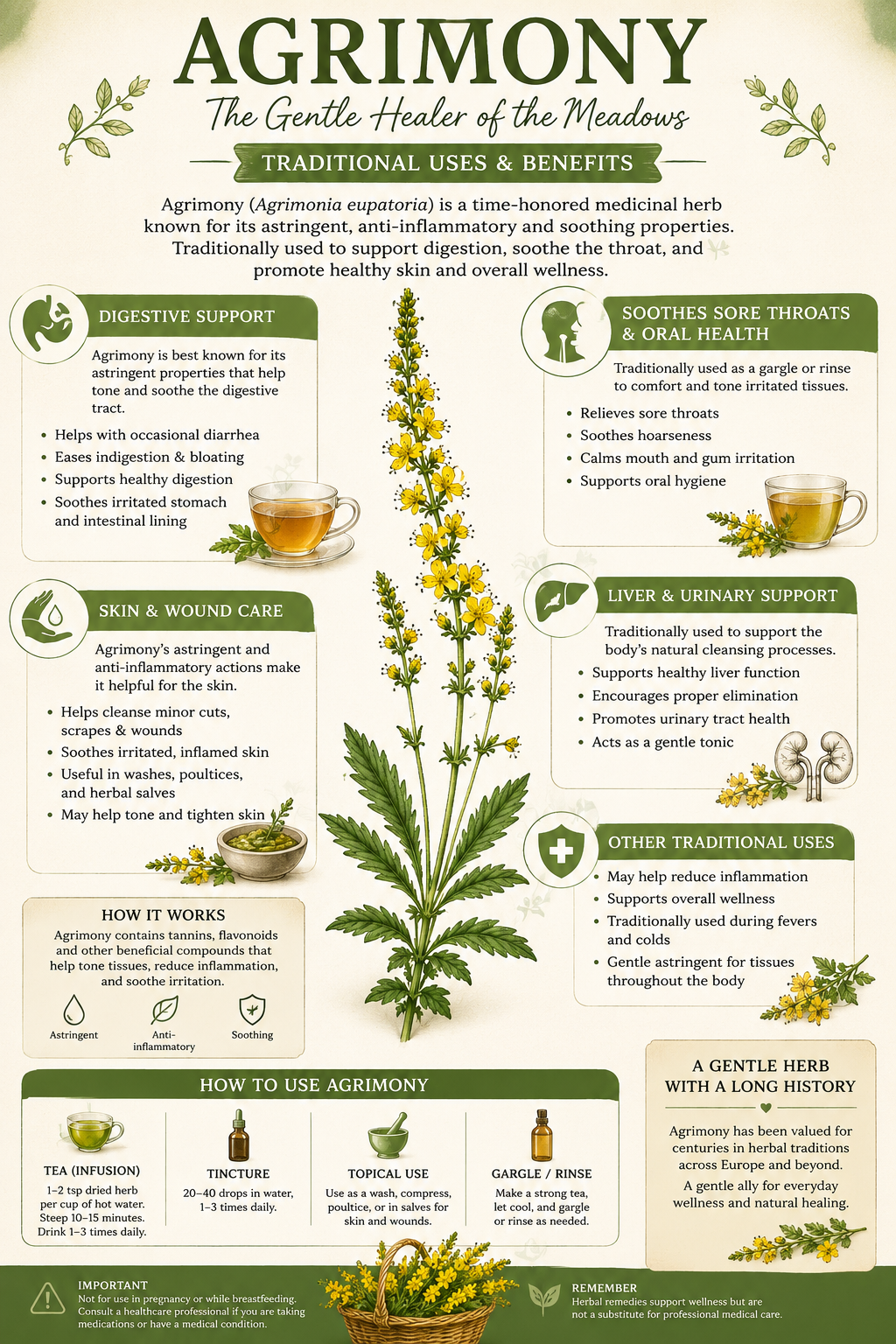
Today, herbal enthusiasts still turn to agrimony for its gentle yet effective medicinal properties. Agrimony is best known as an astringent herb. This means it helps tone and tighten tissues, making it especially useful for issues involving excess moisture, irritation, or inflammation.
Digestive Support
One of agrimony’s most beloved traditional uses is supporting digestion. Herbalists often recommend agrimony tea for occasional diarrhea, bloating, indigestion, and sluggish digestion. Its tannins help soothe irritated tissues in the digestive tract while gently toning the gut.
Many people enjoy sipping warm agrimony tea after heavy meals or during times of digestive discomfort.
Gentle Liver and Urinary Support
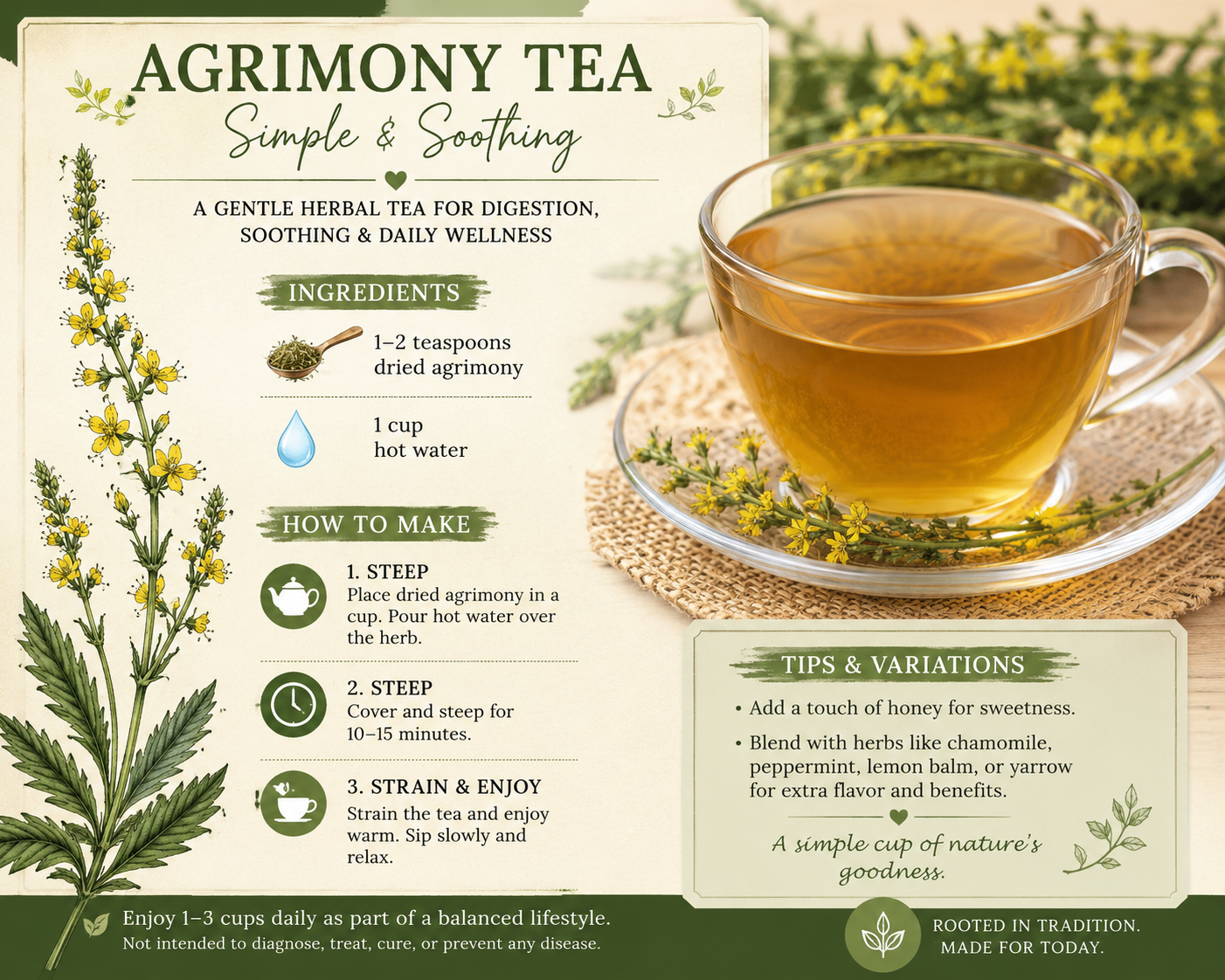
In traditional herbal practices, agrimony was also associated with supporting the liver and urinary system. While modern scientific research is still limited, many herbal traditions describe agrimony as a gentle tonic herb that supports the body’s natural cleansing processes.
Sore Throats and Oral Care
Agrimony has a long history of being used as a gargle for sore throats, hoarseness, and mouth irritation. Singers and public speakers once relied on agrimony rinses to soothe strained voices.
Because of its natural astringent qualities, it may help calm inflamed tissues in the mouth and throat while providing a soothing herbal wash.
Precautions & Considerations
While agrimony has a long history of traditional use, it’s always important to use herbs thoughtfully. Because agrimony contains tannins, consuming large amounts over long periods may cause digestive irritation in some individuals.
Pregnant or breastfeeding individuals, as well as anyone taking medications or managing chronic health conditions, should consult a qualified healthcare professional before using herbal remedies regularly.
As with many traditional herbs, agrimony should be viewed as supportive wellness care rather than a replacement for professional medical treatment.
Skin and Wound Care
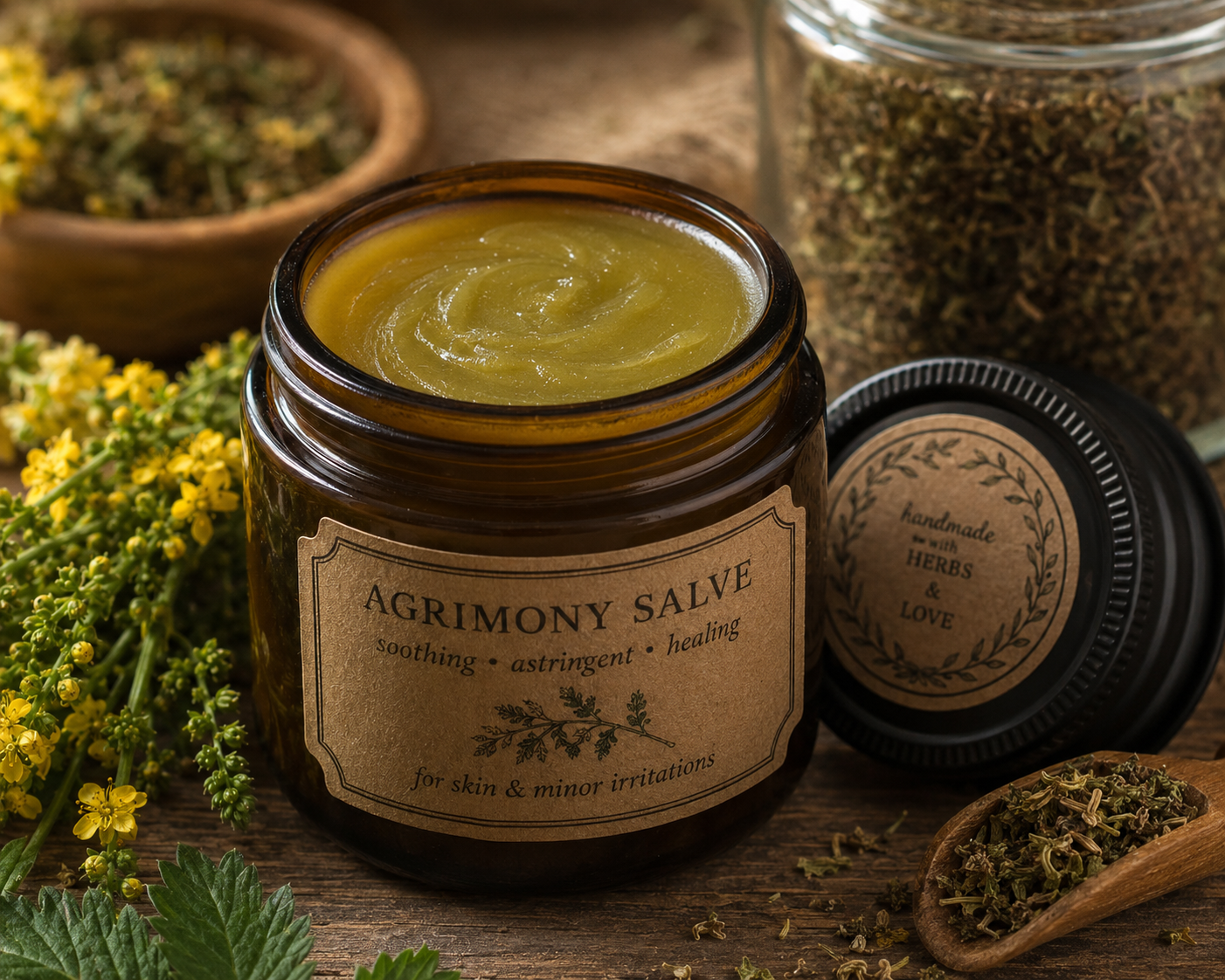
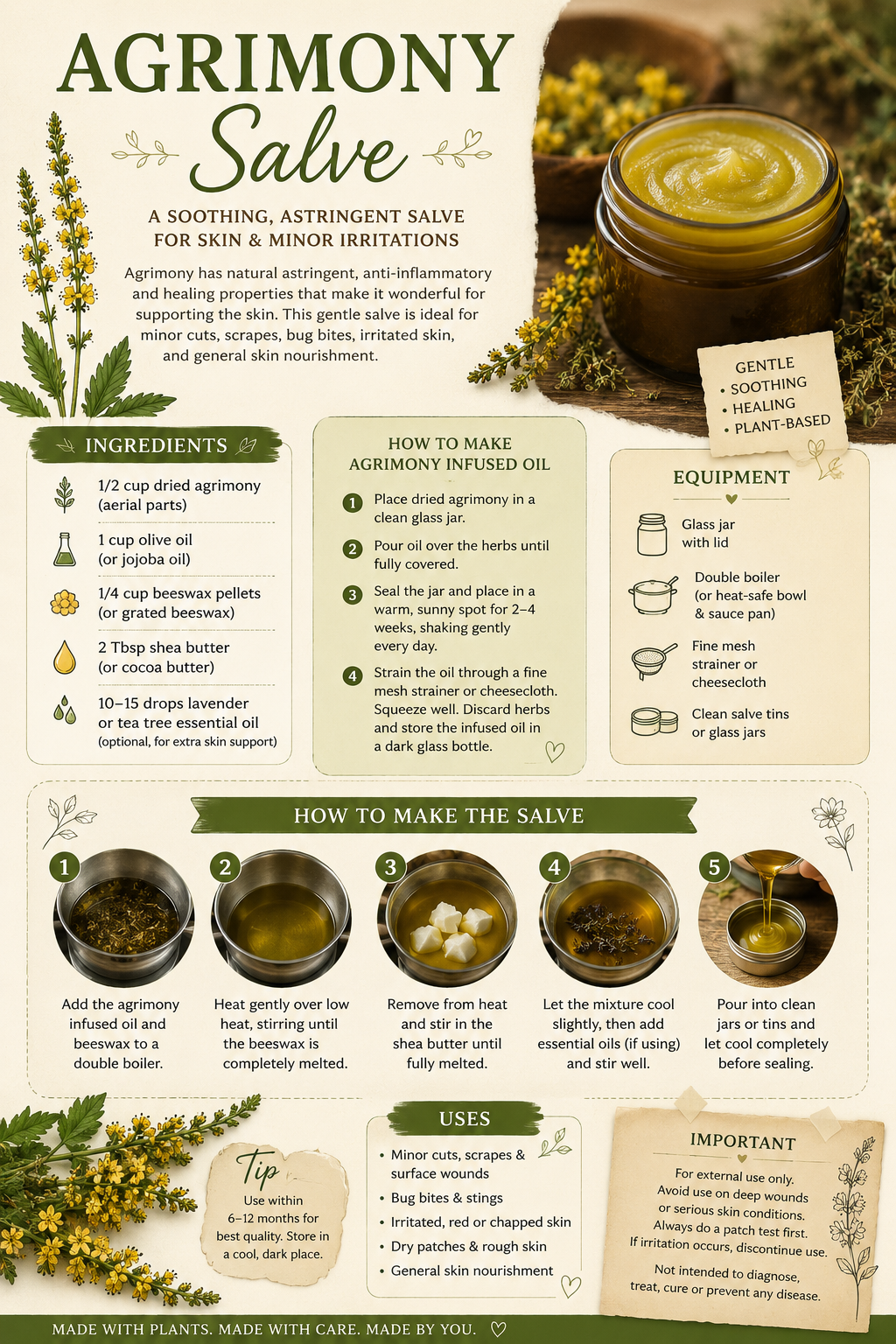
Traditionally, agrimony was used externally for minor cuts, scrapes, bruises, and irritated skin. Herbal washes and poultices made from the leaves and flowers were believed to help cleanse and tone the skin.
Some herbalists still incorporate agrimony into homemade salves, facial steams, and herbal baths for sensitive or troubled skin, particularly in conjunction with calendula, another great herb for skin care.
How to Grow Agrimony
Agrimony (Agrimonia eupatoria) is a surprisingly easy perennial herb to grow. It has a lovely cottage-garden feel, with tall spikes of yellow flowers that attract pollinators and add a soft, meadow-like look to the garden.
Sun
Full sun is ideal (6+ hours daily).
Tolerates partial shade, especially in hotter climates.
Soil
Well-drained soil is best.
Adapts to average garden soil, sandy soil, and even somewhat poor soils.
Prefers a pH between 6.0 and 7.5.
Water
Keep evenly moist while seedlings establish.
Once mature, agrimony is moderately drought tolerant.
Avoid consistently soggy soil.
Starting From Seed
Direct Sowing
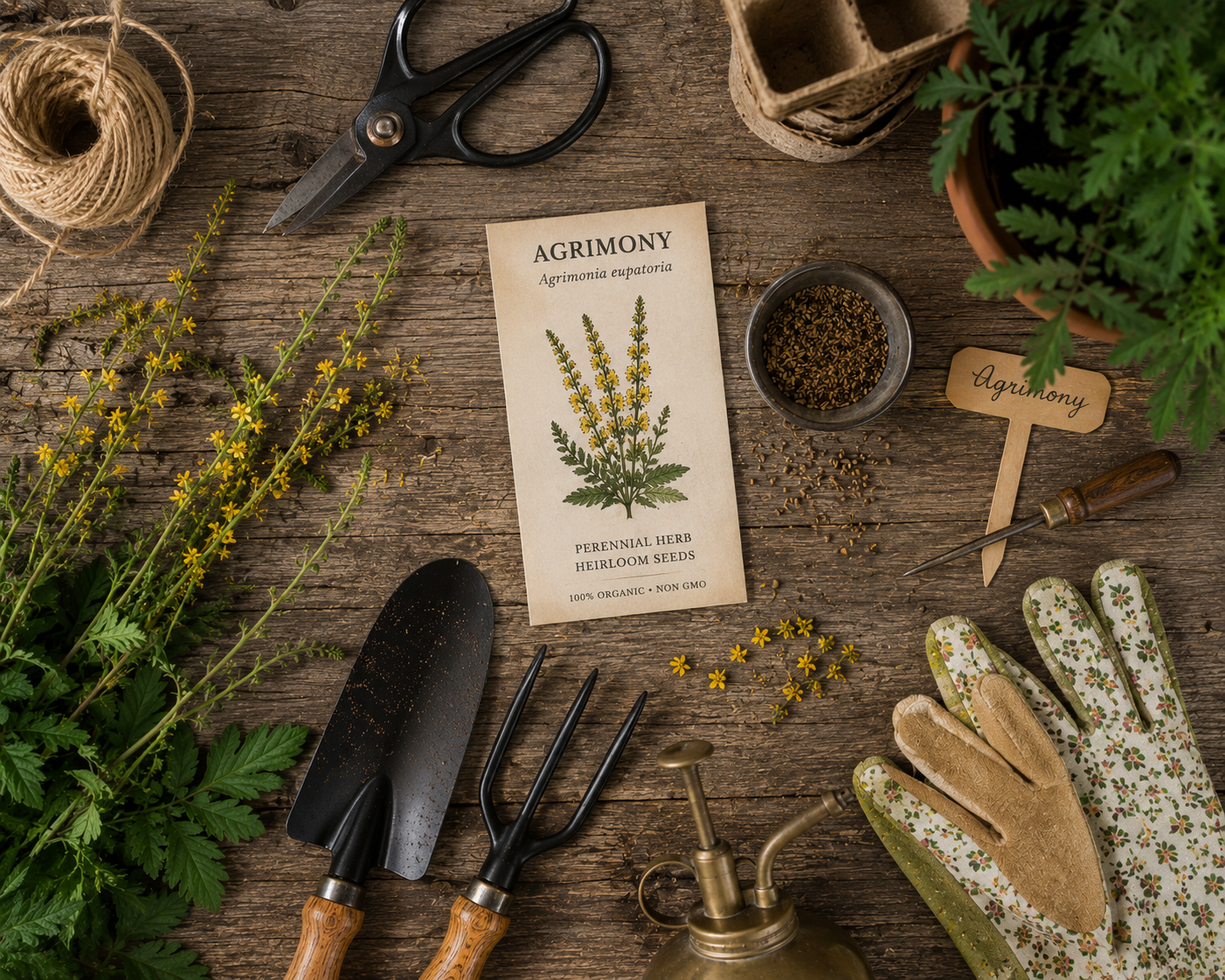
Agrimony seeds can be sown outdoors in:
Early spring after the last frost
Late fall for natural winter stratification
Plant seeds:
About ⅛ inch deep
12–18 inches apart
Gently press into soil and keep moist
Indoor Starting
Start seeds indoors 6–8 weeks before your last frost.
Because agrimony benefits from a cold period, many gardeners get better germination by:
Mixing seeds with slightly damp sand.
Refrigerating for 4–6 weeks.
Planting afterward.
Growth Habit
Agrimony forms clumps of deeply toothed foliage and sends up flowering stalks that can reach:
2–5 feet tall
1–2 feet wide
The bright yellow flower spikes bloom from midsummer into early fall.
Harvesting
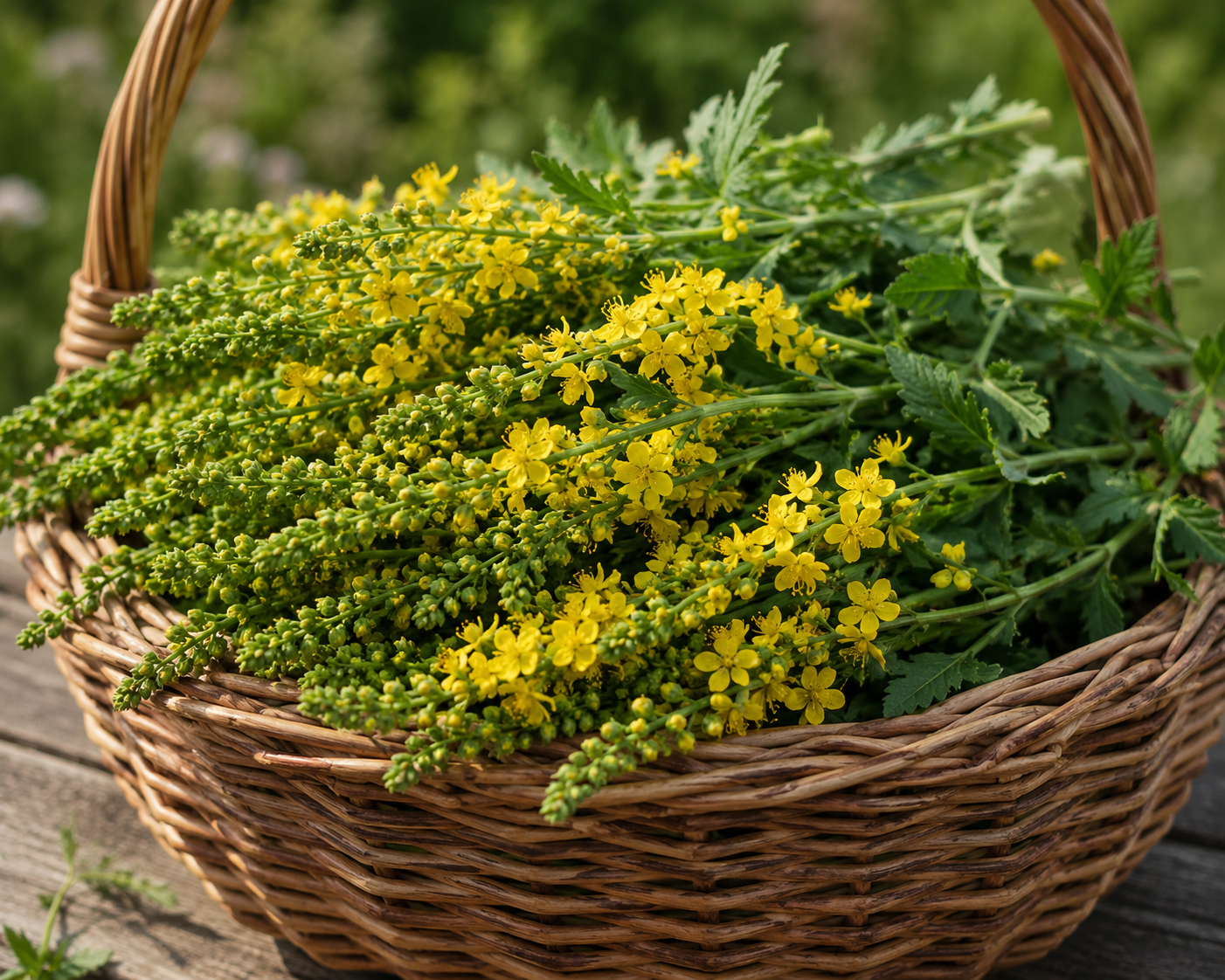
For medicinal use, harvest the aerial parts:
Leaves
Flowers
Upper stems
The best time to harvest is when the flowers are actively blooming.
Cut stems on a dry morning after dew has evaporated.
Drying Agrimony
Gather small bundles.
Hang upside down in a warm, airy location out of direct sunlight.
Allow 1–2 weeks to dry completely.
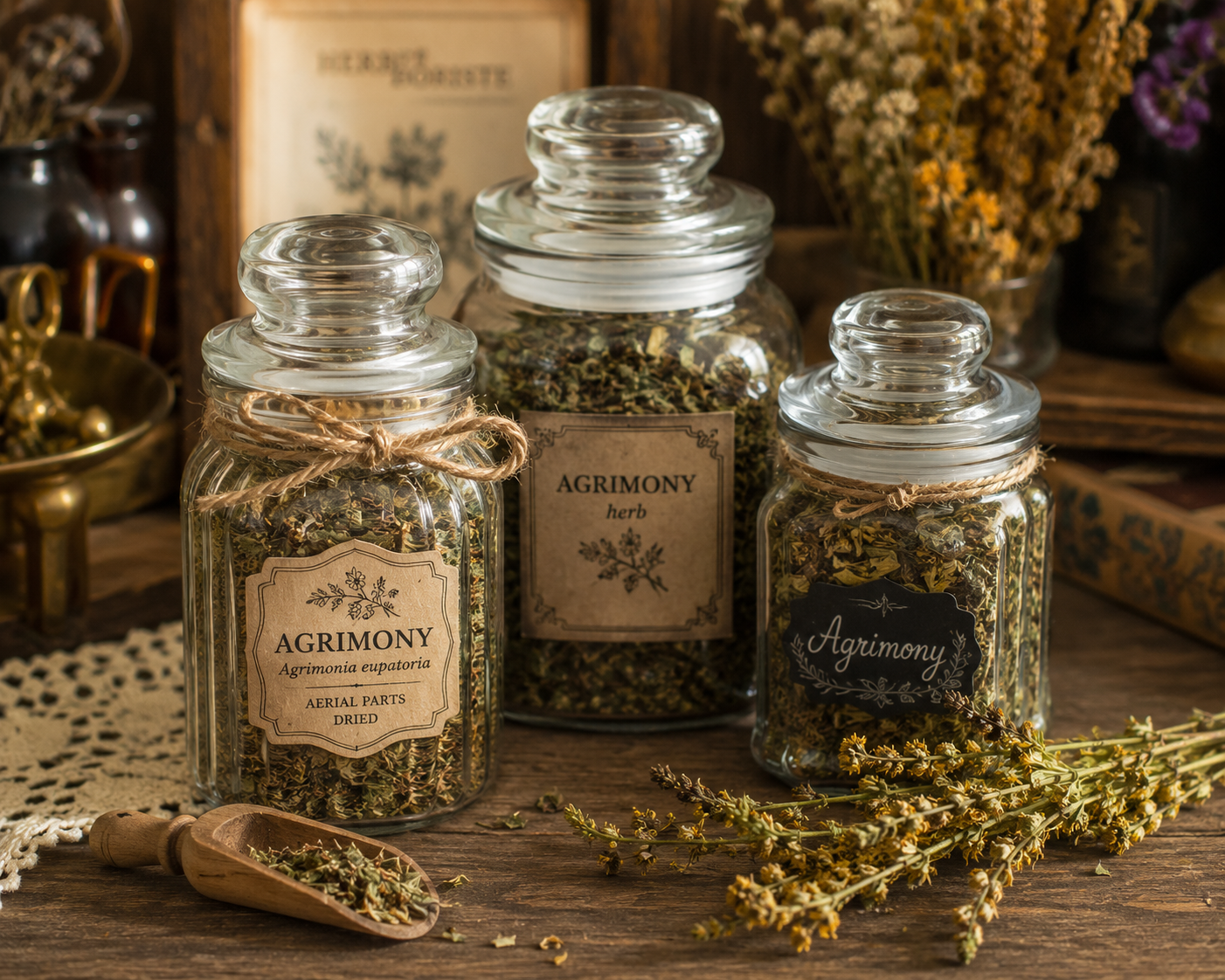
Store in airtight glass jars away from heat and light.
This is exactly the dried herb typically used for teas, tinctures, infused oils, and salves.
Companion Plants
Agrimony looks beautiful alongside:
Echinacea
Yarrow
Calendula
Lavender
Bee Balm
For your farmhouse-style herb garden, agrimony pairs especially well with echinacea, yarrow, and calendula—the yellow flower spikes weave beautifully through a cottage-style planting and create a wonderfully rustic harvest basket in midsummer.
Agrimony may not be the most famous herb in the modern herbal world, but its long-standing reputation speaks for itself. Gentle, grounding, and deeply rooted in traditional folk medicine, this cheerful yellow plant reminds us that some of the best remedies are often the simplest ones growing quietly in nature.
Whether brewed into a comforting tea or added to a homemade herbal apothecary, agrimony continues to earn its place as one of the classic healing herbs of the countryside.